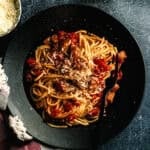
Amatriciana Pasta
The perfect simple, mostly-traditional Amatriciana pasta recipe!
Servings: 4 people
Cost: 30
Ingredients
- Kosher salt
- 2 tbsp Olive oil
- 1/4 lb Guanciale cut into 1/2" cubes
- 1 Red onion small, cut into thin clices
- 1/2 tsp Crushed red pepper flakes
- 1 28 oz. can Tomatoes whole, peeled, crushed
- Salt
- Pepper
- 12 oz Bucatini
- Pecorino romano for garnish
Instructions
- Fill a large pot with salted water, and bring it to a boil. While you’re boiling water, heat two tablespoons of olive oil over medium-low heat in a large skillet on the side.
- Add your guanciale to the skillet. Cook for roughly 10-15 minutes, occasionally stirring, until the fat from the pork has rendered and the meat has a slight golden-brown tinge.
- Add onions and garlic, lightly frying them for 5 to 8 minutes. Afterward, add half a teaspoon of crushed red pepper flakes to the skillet, letting them sit in the rendered pork fat for 30 seconds to 1 minute before moving on.
- Add your tomatoes to the skillet. Season to taste with kosher salt and pepper, then reduce the skillet’s temperature to a gentle simmer. Allow the sauce to cook for 15 to 20 minutes, stirring occasionally, until the sauce has reached your desired thickness.
- Remove your sauce from the heat. Set aside, then begin to cook your pasta in the large pot of salted water. We are aiming for al dente, so just follow the instructions on the box if you’re not quite sure how long to cook pasta for. Once it’s done cooking, drain your pasta, leaving about a cup of pasta water in the pot.
- Transfer pasta to the sauce. Toss the pasta in the sauce for 3 to 4 minutes, which will thicken the sauce in the process. Feel free to add more water if you find that the sauce is too thick for your liking. Once you’re happy with it, remove it from the heat. Taste and season with additional kosher salt, pepper, and red pepper flakes, if desired.
- Serve your Amatriciana! This recipe makes roughly four servings, but feel free to adjust the ingredient amounts if you’re serving more/fewer people. Grate your pecorino cheese to garnish the dish as the final flourish, and enjoy!
Notes
• Start guanciale in a cold pan and salt your pasta water like the sea; it sets the foundation for flavor
• Save pasta water and toss 2 to 3 minutes in the sauce. This is how you get that silky, emulsified finish
• Use Pecorino Romano, hand-crushed San Marzano tomatoes, and finish heating it off so the cheese melts smoothly, not clumpy
• Save pasta water and toss 2 to 3 minutes in the sauce. This is how you get that silky, emulsified finish
• Use Pecorino Romano, hand-crushed San Marzano tomatoes, and finish heating it off so the cheese melts smoothly, not clumpy
Nutrition
Calories: 591kcal | Carbohydrates: 66g | Protein: 14g | Fat: 30g | Saturated Fat: 9g | Polyunsaturated Fat: 1g | Monounsaturated Fat: 5g | Cholesterol: 30mg | Sodium: 298mg | Potassium: 230mg | Fiber: 3g | Sugar: 3g | Vitamin A: 3IU | Vitamin C: 2mg | Calcium: 24mg | Iron: 1mg