


| Prep Time | Cook Time | Total Time | Serves |
| 10 min | 35 min | 45 min | 4 people |
I’m always chasing that one bite I simply can’t forget. This Amatriciana started in Italy, late night, jet-lagged, tucked into a charmed, dimly lit trattoria where the air smelled like garlic, tomatoes, cured pork, and red wine. One forkful in, and I was done for. Salty zesty guanciale, bright tomato, a little heat…simple, but dialed all the way in. It was the single best bite of pasta I’ve ever had.

So naturally, as I always do, I came home obsessed with recreating it – using the same core ingredients, but refining the technique until it hit even better than my go-to spaghetti sauce with fresh tomatoes. It’s not reinvented, just some intentional twists that amp up the flavor. If you love spaghetti, just wait til you try this. You will never go back with this recipe that quietly steals the show every time I make it. For a complete meal, consider pairing one of my favorite salads!
Table of Contents
- The Perfect Blend of Savory, Slightly Sweet, and Spicy
- Why You’ll Love Amatriciana
- Key Ingredients
- Step-by-Step Instructions
- Simple Substitutions & Variations
- Tips for Making the Perfect Amatriciana
- Other Delicious Pasta Dishes
- Frequently Asked Questions About Amatriciana
- Final Thoughts on My Amatriciana Pasta
- Amatriciana Pasta Recipe
The Perfect Blend of Savory, Slightly Sweet, and Spicy

Amatriciana is one of the four classic Roman pastas. Unlike all ‘a Gricia, Cacio e Pepe, or Carbonara, it’s the only one to use a tomato-based sauce. The sauce really is the backbone of the pasta, but I promise you this won’t be like any other sauce you’ve tried.
The sauce recipe blends the heat of crushed red pepper flakes with the saltiness of the cheese, balanced by the richness of the pork. This gives it a lot more flavor than even the best spaghetti sauce recipe. Despite that, actually making the sauce is a fairly straightforward task.
Why You’ll Love Amatriciana
If you’re looking for a quick weeknight meal that will envelop your taste buds with flavor, then this pasta dish will quickly become one of your favorites. Home cooks like me love that it takes less than an hour to make, and anyone tired of regular old pasta sauce will appreciate the extra heat this recipe provides.
Traditionally, Bucatini is the Roman pasta of choice to pair with this sauce. The hollow center lets the sauce seep inside the pasta, giving every bite a bit more flavor. Still, spaghetti, or pretty much any of your favorite pastas, really – will work just fine as well. Be sure to check out my Picatta Milanese recipe if you’re after even more Italian goodness!
Key Ingredients

Just like with my lobster ravioli sauce recipe, using the right ingredients is key if you really want to bring out the flavor of this dish. Fortunately, the ingredients you’ll need for this recipe are fairly simple, so just focus on getting high-quality ingredients.
- Black pepper: If possible, freshly ground black pepper will give you the best bite!
- Canned Tomatoes: San Marzano tomatoes, peeled and whole, provide the perfect base for our sauce.
- Crushed Red Pepper Flakes: This is where the heat for the recipe comes from. Feel free to add more if you prefer a bit of an extra kick!
- Guanciale: This cured Italian pork jowl is the traditional choice for this recipe, giving the sauce its signature savory flavor. Bacon works in a pinch. Just dice it small.
- Kosher Salt: Regular salt will work too, but kosher salt has larger crystals that help distribute flavor more evenly throughout the sauce.
- Olive Oil: Grab your trusty olive oil dispenser bottle, pour, and adjust to taste. More olive oil will make the sauce even richer, but be careful not to overdo it.
- Pasta: Bucanti is the traditional choice here for its hollow interior that soaks up the sauce, but spaghetti is a great alternative if you can’t find any bucatini.
- Pecorino Romano Cheese: Pecorino cheese adds the sharp and salty flavor that helps round this dish out.
- Red Onion: A thinly-cliced red onion will add a dash of sweetness to the sauce.
Tip
Use high-quality guanciale and hand-crushed whole San Marzano tomatoes – and render the guanciale low and slow from a cold pan. Starting cold lets the fat melt gradually (not seize), giving you that silky, emulsified base the sauce is built on. Then crush the tomatoes by hand right before adding them so you keep a mix of texture, some body, some bite, which makes the final sauce feel restaurant-level, not flat.
A full list of ingredients with amounts and substitutions is in the recipe card below.
Step-by-Step Instructions
Ready to start making this delicious meal? Grab a large pot, a large skillet, a measuring cup, a tablespoon, a teaspoon, a knife, a cutting board, a slotted spoon, a strainer, and a cheese grater, then let’s get to cooking.

Step 1: Fill a large pot with salted water, and bring it to a boil. While you’re boiling water, heat two tablespoons of olive oil over medium-low heat in a large skillet on the side.

Step 2: Add your guanciale to the skillet. Cook for roughly 10-15 minutes, occasionally stirring, until the fat from the pork has rendered and the meat is left with a slight golden brown tinge.

Step 3: Add minced onions and Garlic, lightly frying them for 5 to 8 minutes. Afterward, add half a teaspoon of crushed red pepper flakes to the skillet, letting them sit in the rendered pork fat for 30 seconds to a minute before moving on.

Step 4: Add Tomatoes + a Splash of Wine. Season to taste with kosher salt and pepper, then reduce the skillet’s temperature to a gentle simmer. Allow the sauce to cook for 15 to 20 minutes, stirring occasionally, until thickened.

Step 5: Remove the sauce from the heat. Remove sauce from heat and set aside. Cook pasta per box in well-salted water until al dente (per package). Drain, reserving 1 cup of pasta water.

Step 6: Transfer pasta to the sauce. Add pasta to the sauce and toss for 3-4 minutes until glossy and thickened. Loosen with reserved pasta water as needed. Finish with salt, pepper, and red pepper flakes to taste.
Step 7: Serve Amatriciana. This recipe makes roughly four servings, but feel free to adjust the ingredient amounts if you’re serving more/fewer people. Generously grate Pecorino cheese to garnish and enjoy!
Simple Substitutions & Variations
Depending on where you live and what your local grocery store has in stock, some of the items used in the traditional recipe might be a bit hard to find. Thankfully, I have a few substitutions you can try. They won’t be entirely true to the original recipe, but they’ll largely retain the flavor while being slightly easier to source.
- Spaghetti will work just fine as the pasta if you can’t find bucatini. I was actually out of bucatini when I made this to shoot, so I subbed in spaghetti.
- Pancetta is a bit leaner than guanciale, but it’s a good alternative if it’s impossible to source guanciale pig jowl. Bacon can work in a pinch
- Red onions are great if you want to add a bit of extra sweetness to your dish, but feel free to skip them if you want a more traditional tasting Amatriciana.
- Tomato passata can be used in place of the canned, whole, peeled tomatoes if you’re after a sweet tomato flavor with less acidity.
Tip
No guanciale? Use pancetta or bacon (drain the fat). Swap Pecorino Romano with Parmesan + salt, and sub San Marzano tomatoes with whole peeled tomatoes + a pinch of sugar—just keep the fat, acid, and salt balanced.
Tips for Making the Perfect Amatriciana

Pin this article
Pin It NowTo wrap things up, I figured I’d share some little tips and tricks that I’ve found will help your Amatriciana turn out perfectly. It’s short, but sweet.
- Keep a close eye on your pasta – Overcooking it only takes a minute, and we want al dente pasta, so the sauce will cling to it perfectly.
- Don’t puree the tomatoes – I find that leaving them a bit chunky gives the sauce a better texture, rather than ending up using a textureless tomato paste.
- Go fresh if possible – Freshly grated cheese and even fresh tomatoes can add a lot of extra flavor for very little effort.
- Avoid rushing things – It might be tempting to try and speed things up by using high heat instead of medium heat, but I promise that this is a mistake. The rendered fat will burn, leaving your meat tough and your sauce bitter, so just take your time with it!
- Make sure to have everything on hand when you start – Whether you’re using a basket organizer or just laying things out on the counter, make sure everything you’ll need is within arm’s reach before you start. Timing is everything, and you definitely don’t want to overcook something by accident!
Other Delicious Pasta Dishes


Frequently Asked Questions About Amatriciana
Pronounced “ah-mah-tree-chah-nah”, Amatriciana doesn’t have a direct translation, but the name itself comes from the region where the sauce originated, Amatrice (a small town in Italy).
Traditionally, Amatriciana sauce is made using tomatoes, guanciale, black pepper, olive oil, dry white wine, salt, and pecorino Romano.Amatriciana offers a mixture of saltiness, richness, heat, and sharpness. If rich and savory with a dash of sweetness is what you’re after, then you’re sure to love this recipe!
Final Thoughts on My Amatriciana Pasta

Easy to make and simply delightful to eat, I’m sure this pasta Amatriciana recipe will quickly become one of your family favorites! The ingredients might be a bit harder to find than your average pasta recipe, but there are plenty of substitutions you can use, and the end results are always worth it.
Start with a salad, enjoy your main course of Amatriciana, then wrap up with something like my lemon curd cake recipe for a complete package, or consider making my world-famous (at least I think so) spaghetti sauce recipe with fresh tomatoes. Everyone deserves a great home-cooked meal, and, by following the instructions above, you can have one hot and ready in under an hour. Enjoy, and until next time, thanks for reading!
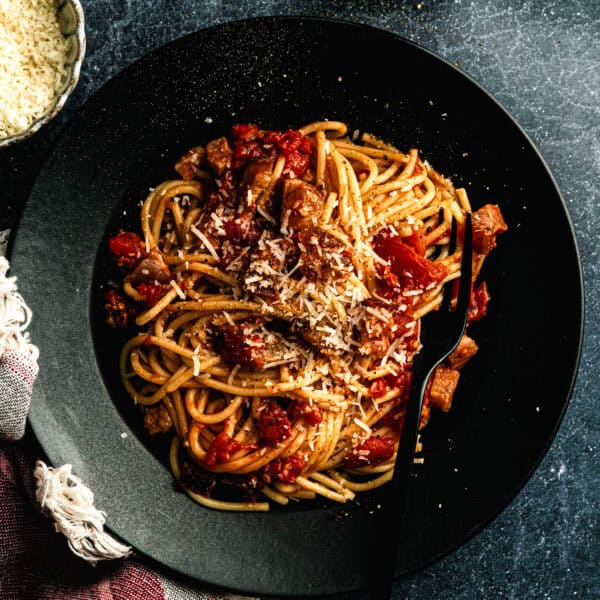
Amatriciana Pasta
Ingredients
- Kosher salt
- 2 tbsp Olive oil
- 1/4 lb Guanciale, cut into 1/2" cubes
- 1 Red onion, small, cut into thin clices
- 1/2 tsp Crushed red pepper flakes
- 1 28 oz. can Tomatoes, whole, peeled, crushed
- Salt
- Pepper
- 12 oz Bucatini
- Pecorino romano, for garnish
Instructions
- Fill a large pot with salted water, and bring it to a boil. While you’re boiling water, heat two tablespoons of olive oil over medium-low heat in a large skillet on the side.
- Add your guanciale to the skillet. Cook for roughly 10-15 minutes, occasionally stirring, until the fat from the pork has rendered and the meat has a slight golden-brown tinge.
- Add onions and garlic, lightly frying them for 5 to 8 minutes. Afterward, add half a teaspoon of crushed red pepper flakes to the skillet, letting them sit in the rendered pork fat for 30 seconds to 1 minute before moving on.
- Add your tomatoes to the skillet. Season to taste with kosher salt and pepper, then reduce the skillet’s temperature to a gentle simmer. Allow the sauce to cook for 15 to 20 minutes, stirring occasionally, until the sauce has reached your desired thickness.
- Remove your sauce from the heat. Set aside, then begin to cook your pasta in the large pot of salted water. We are aiming for al dente, so just follow the instructions on the box if you’re not quite sure how long to cook pasta for. Once it’s done cooking, drain your pasta, leaving about a cup of pasta water in the pot.
- Transfer pasta to the sauce. Toss the pasta in the sauce for 3 to 4 minutes, which will thicken the sauce in the process. Feel free to add more water if you find that the sauce is too thick for your liking. Once you’re happy with it, remove it from the heat. Taste and season with additional kosher salt, pepper, and red pepper flakes, if desired.
- Serve your Amatriciana! This recipe makes roughly four servings, but feel free to adjust the ingredient amounts if you’re serving more/fewer people. Grate your pecorino cheese to garnish the dish as the final flourish, and enjoy!
Notes
• Save pasta water and toss 2 to 3 minutes in the sauce. This is how you get that silky, emulsified finish
• Use Pecorino Romano, hand-crushed San Marzano tomatoes, and finish heating it off so the cheese melts smoothly, not clumpy
Nutrition
Nutrition information is automatically calculated, so should only be used as an approximation.














• Start your guanciale in a cold pan – slow render = better texture + flavor
• Salt your pasta water aggressively. It should taste like the sea
• Save your pasta water. It’s the key to a silky, emulsified sauce
• Don’t rush the toss. 2–3 minutes in the sauce builds real depth
• Use Pecorino Romano, not Parmesan, for that sharp, authentic bite
• Hand-crush San Marzano tomatoes for better texture (not too smooth)
• Finish with the heat off cheese melts better and won’t clump