

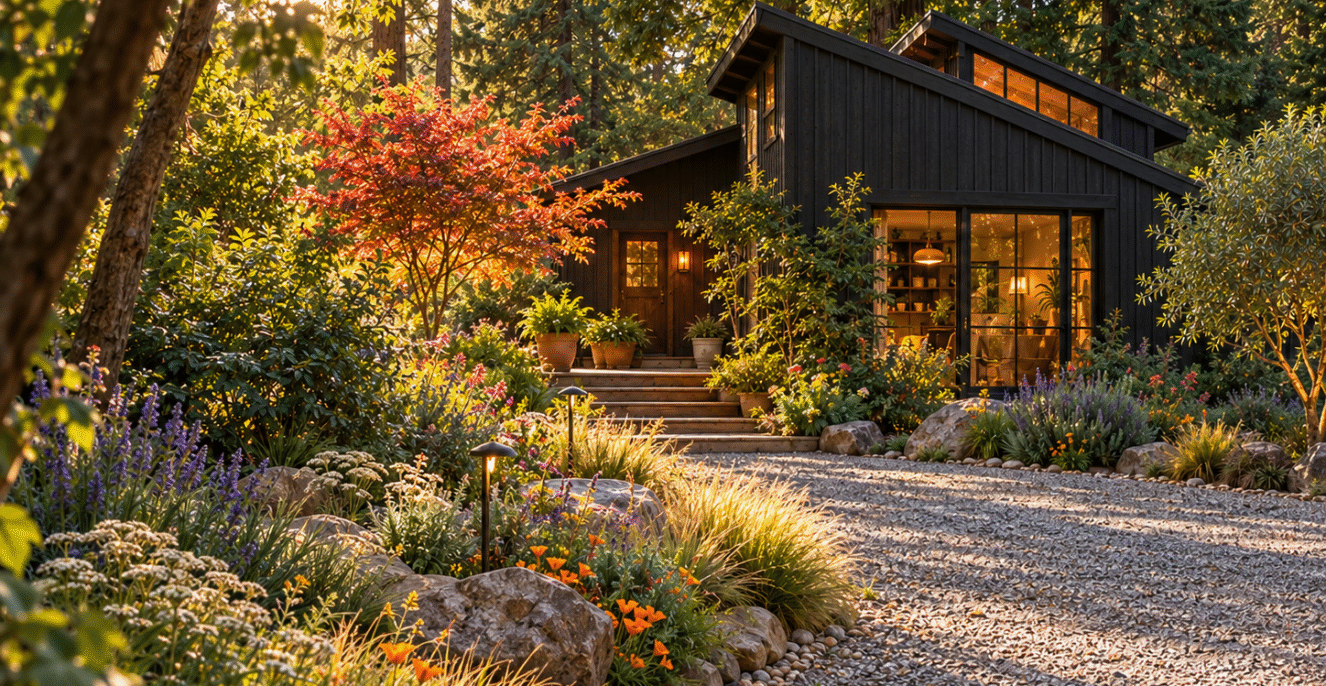
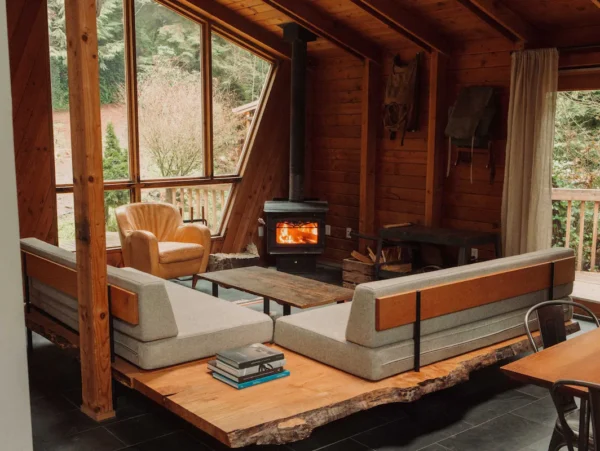
There are a few things I knew I wanted when we bought our little cabin on the Northern California Coast. A wood-burning stove. A library full of books. Windows that stretch high into the clouds and make you feel like you’re living inside the forest itself.
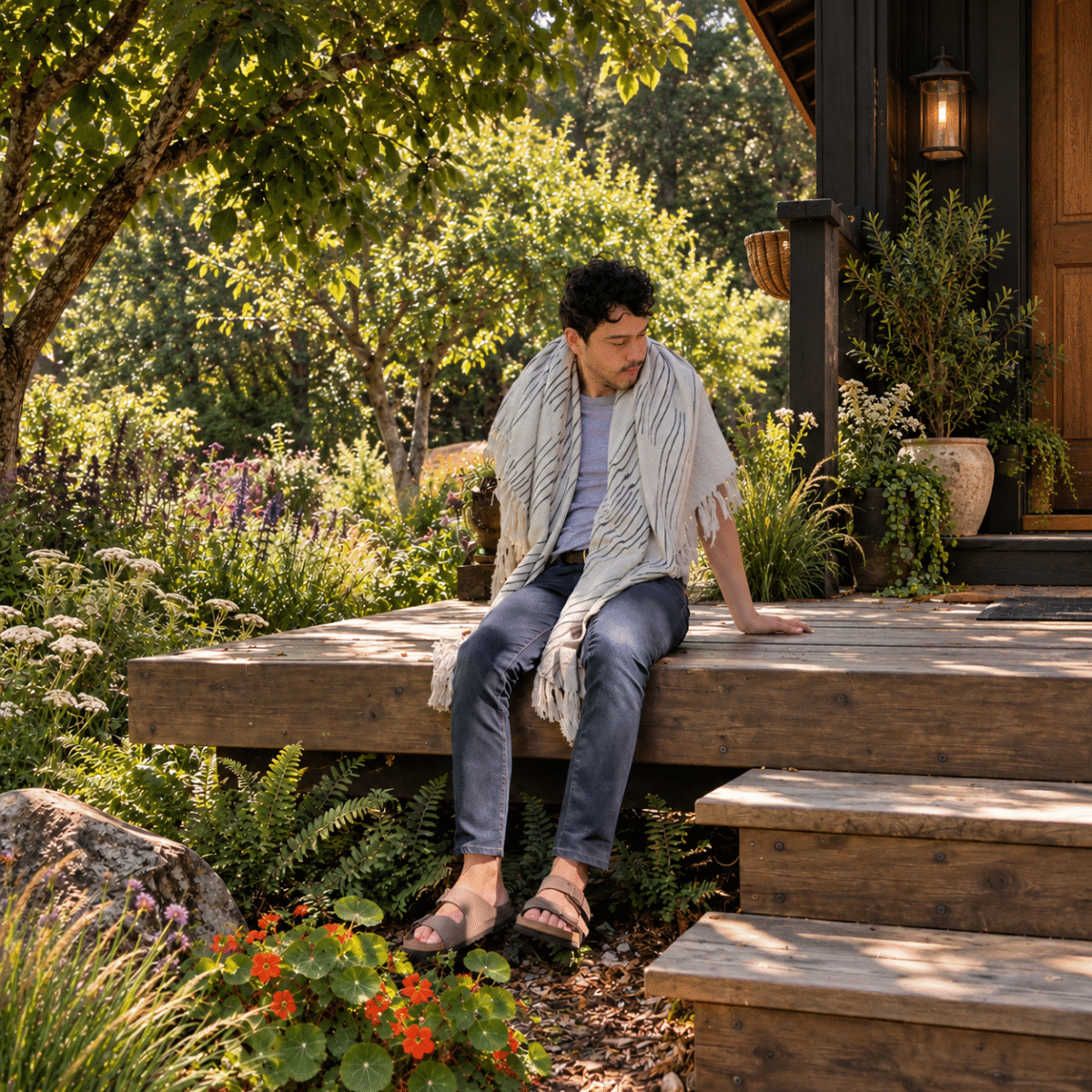
What I didn’t anticipate? Falling completely, hopelessly in love with the land itself. In some ways, it’s just as important as the interior design or exterior paint.
Our cabin sits on approximately three-quarters of an acre, surrounded by towering redwoods, with two meadows, an ancient Gravenstein apple tree, mature roses, even a babbling creek, with a little wooden bridge that looks like it belongs in a storybook.
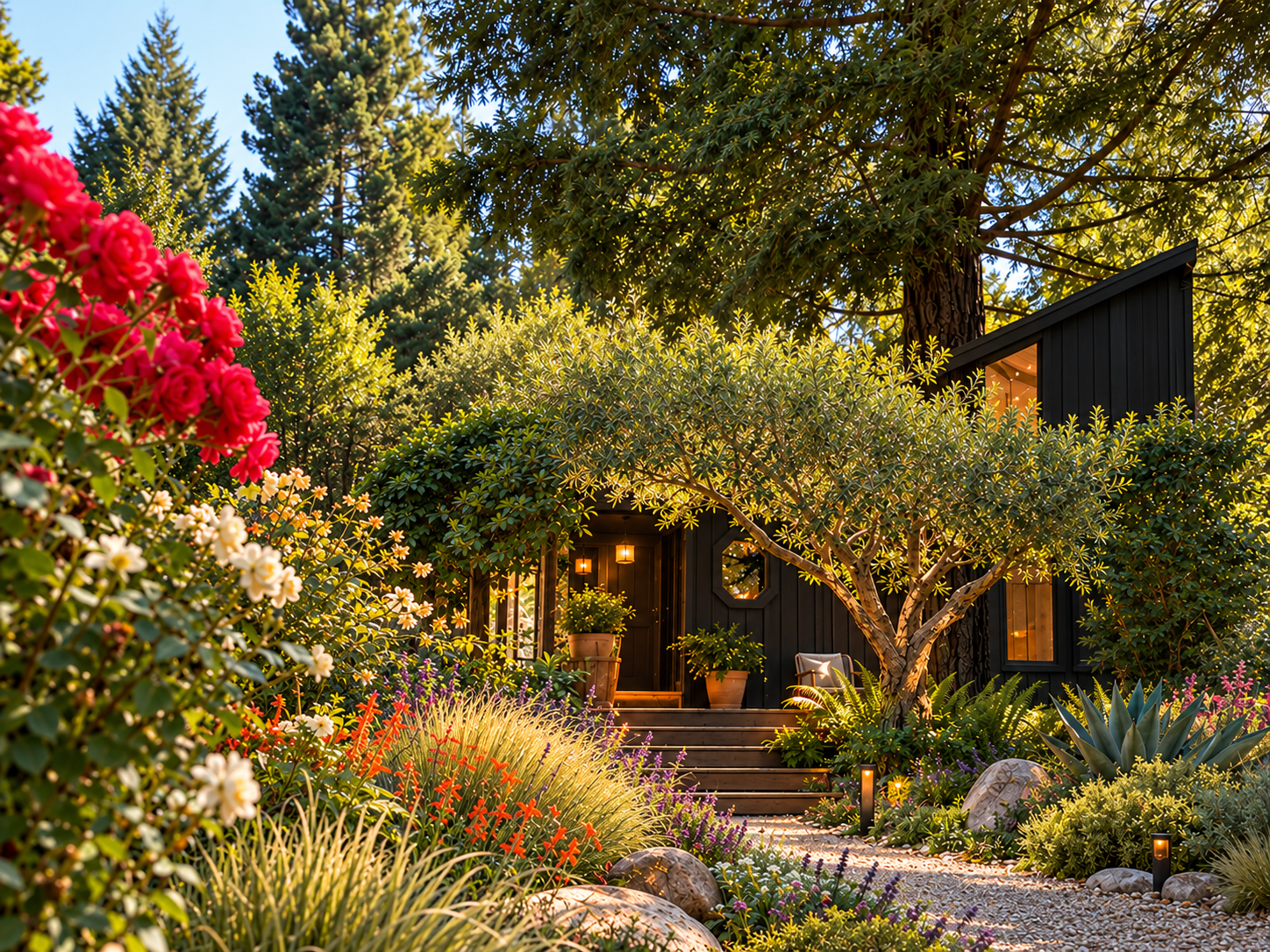
It’s beautiful. Really, it is. But it’s wild. And, like pretty much everything else about this 1980s cabin renovation, it needs a little love and a lot of elbow grease to coax it to perfection.
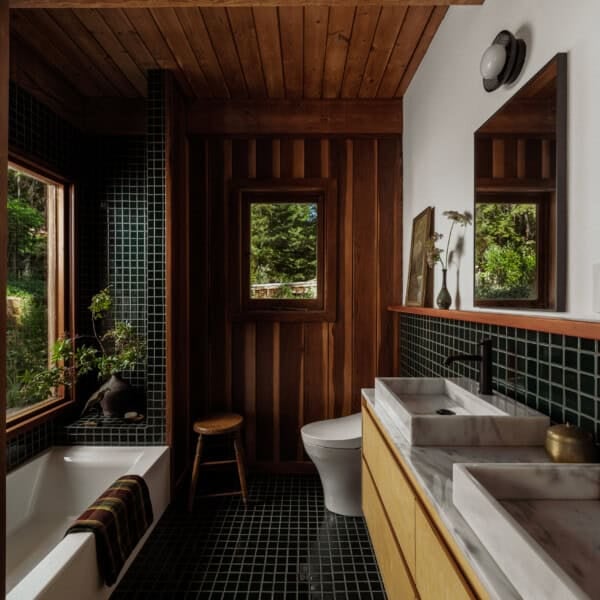
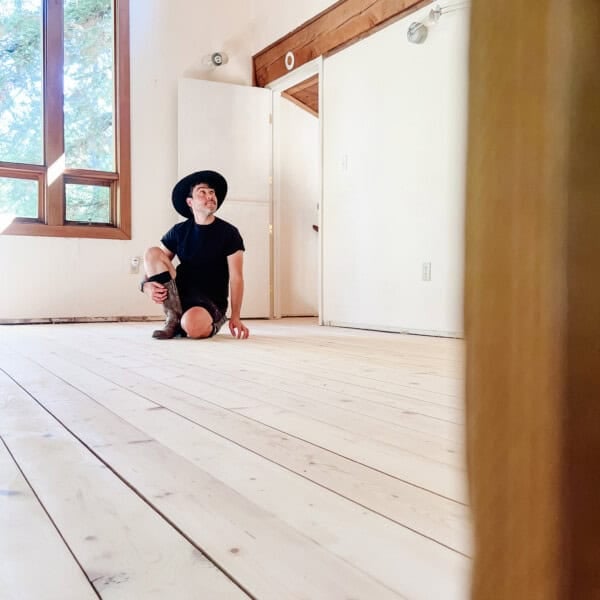
The good news? We’ve made a ton of progress on the house itself; the electrical and plumbing are functional. Windows are no longer leaking. The exterior is sealed. Original pine floors have been restored. We even have a moody bathroom of our dreams (after two years of nothing), ideal for lazy bubble baths with dog-eared books.
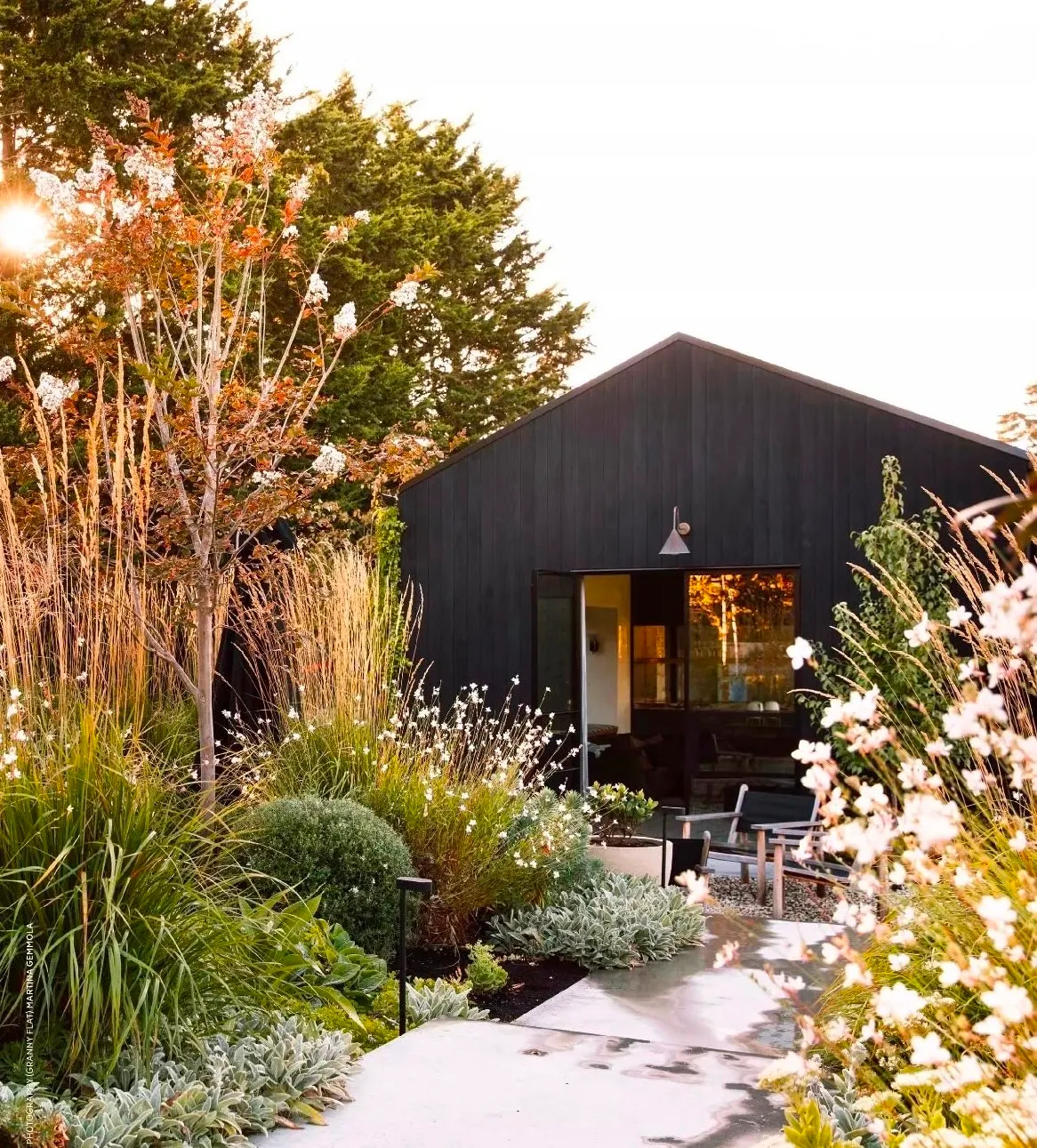
With that momentum, and before I lose my fortitude (while waiting for the kitchen cabinets to arrive), I’m turning my attention outdoors. Specifically, I’m developing a landscape plan that combines drought tolerant landscaping ideas, California native plants, and a layered, romantic meadowscape-inspired design. Nothing fussy, too sharp or precise. Think winding paths, deer grass, and plants that thrive all year long, dancing in the afternoon sun.
Think wildflower meadows, flowing sculptural grasses, winding gravel paths, silver-green foliage, and a few gloriously unruly roses with pops of purple and red wildflowers.
The goal isn’t to tame the forest. It’s to make the garden feel like it has always been part of it.
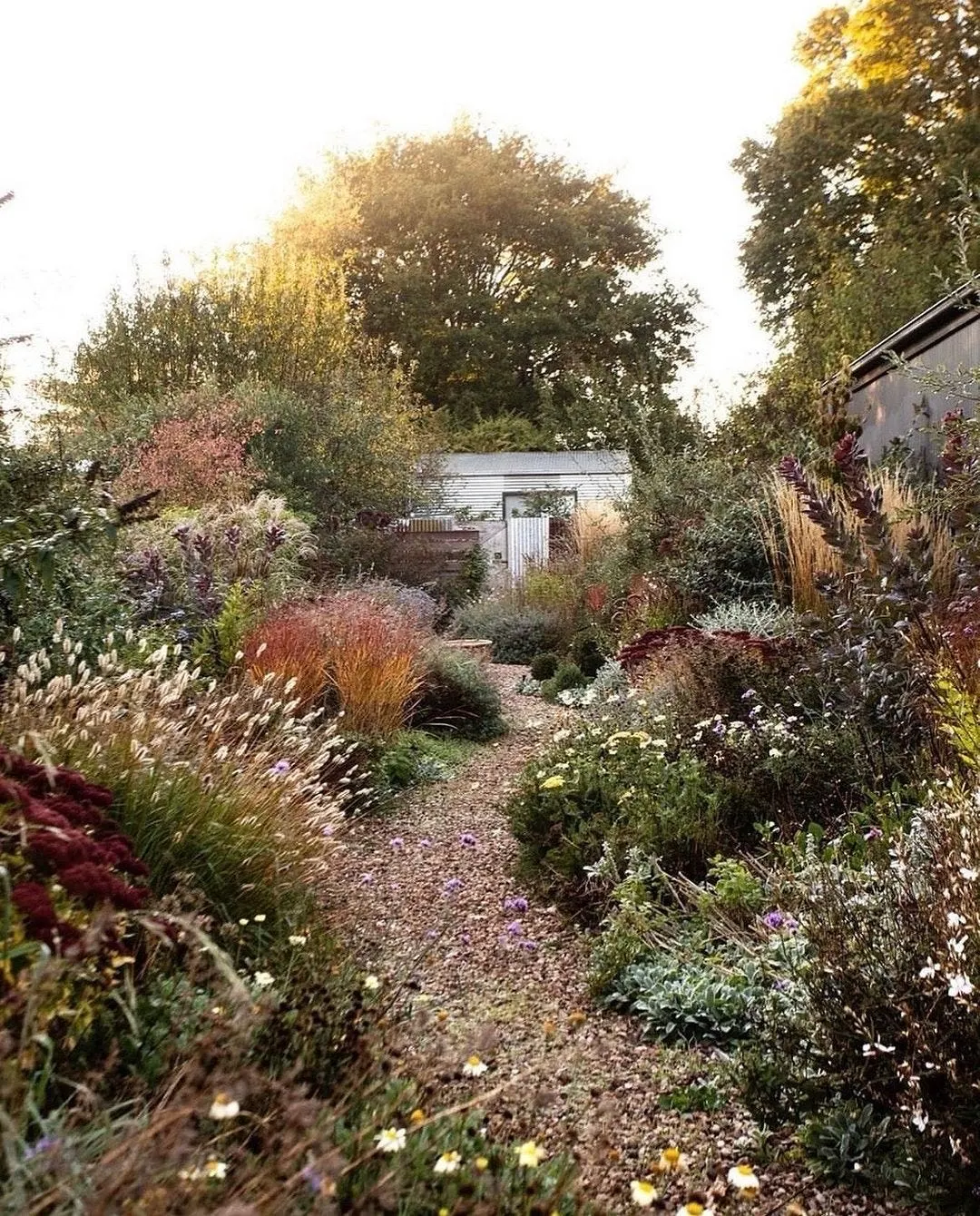
And because we’re in California, I want to do it thoughtfully, with plants that can handle our climate without demanding endless water. We are on well water, and it runs dry in the summer. A major consideration for the design. But don’t worry, I’ve got a plan.
Here’s exactly how I’m approaching the design, what we’re planning to plant, and what I expect it to cost.
Table of Contents
- Why We’re Choosing Drought Tolerant Landscaping
- Start With the Landscape You Already Have
- Our California Native Garden Design Plan
- The Best Drought Tolerant Plants for Our California Garden
- Can You Mix Native and Nonnative Plants?
- How Much Does Drought Tolerant Landscaping Cost?
- How to Design Your Own Drought Tolerant Landscape
- Common Drought Tolerant Landscaping Mistakes to Avoid
- Frequently Asked Questions
- The Garden I Hope We Grow Into
Why We’re Choosing Drought Tolerant Landscaping
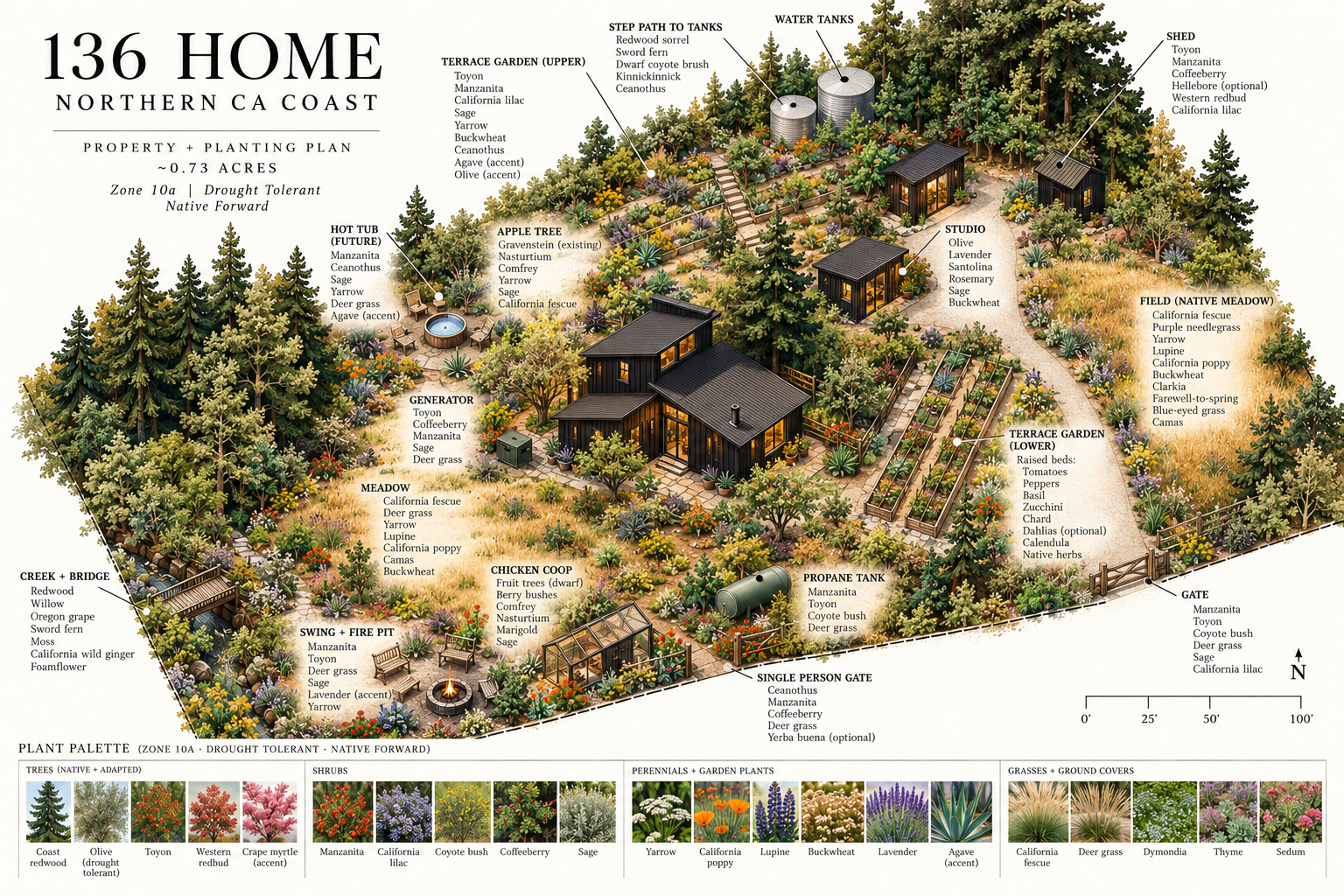
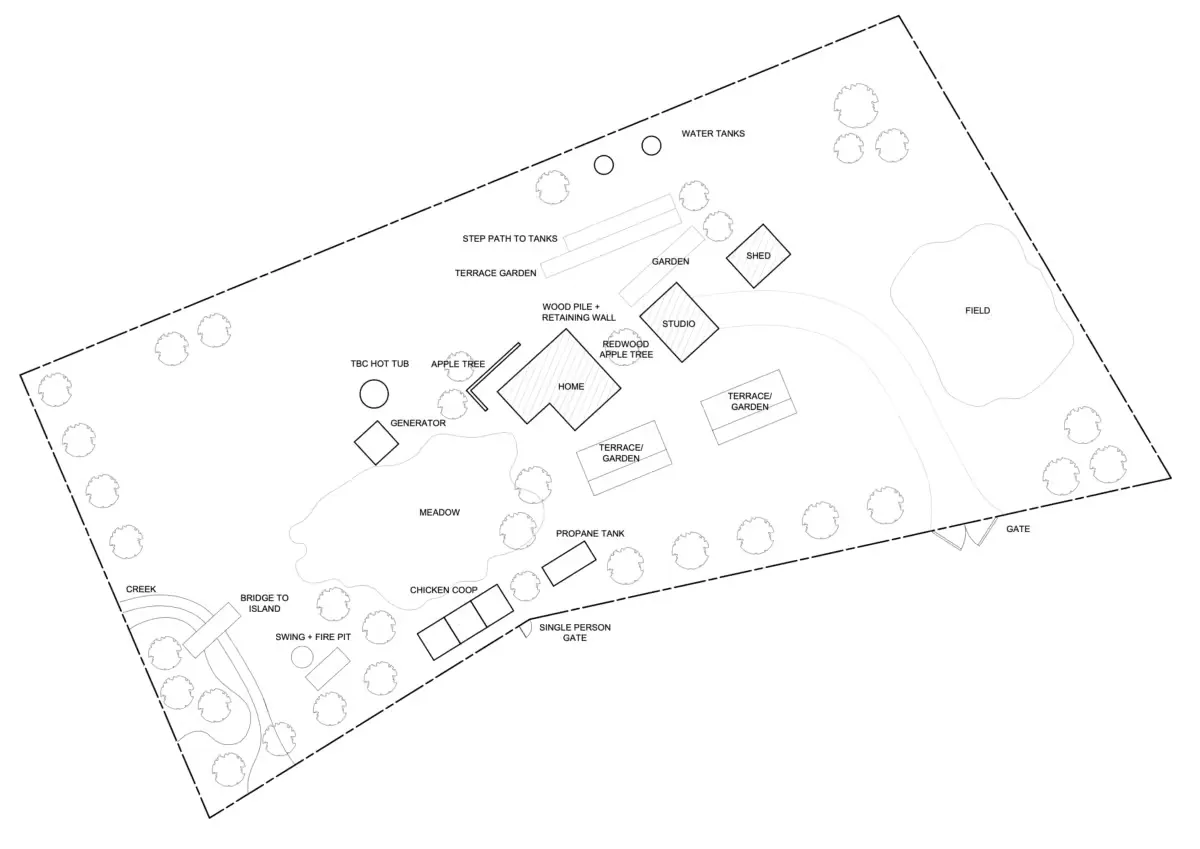
Here’s the thing, guys. I’m not interested in creating a garden that needs constant watering, mowing, or fussing to look beautiful. It should flow naturally. It should feel lush and established, but still be realistic to maintain with limited water and maintenance, while we split our time between San Francisco and the cabin.
That’s where drought tolerant landscaping comes in.
Drought tolerant landscaping is about choosing plants that can thrive with less supplemental water once established. It doesn’t mean a yard full of gravel and cacti.
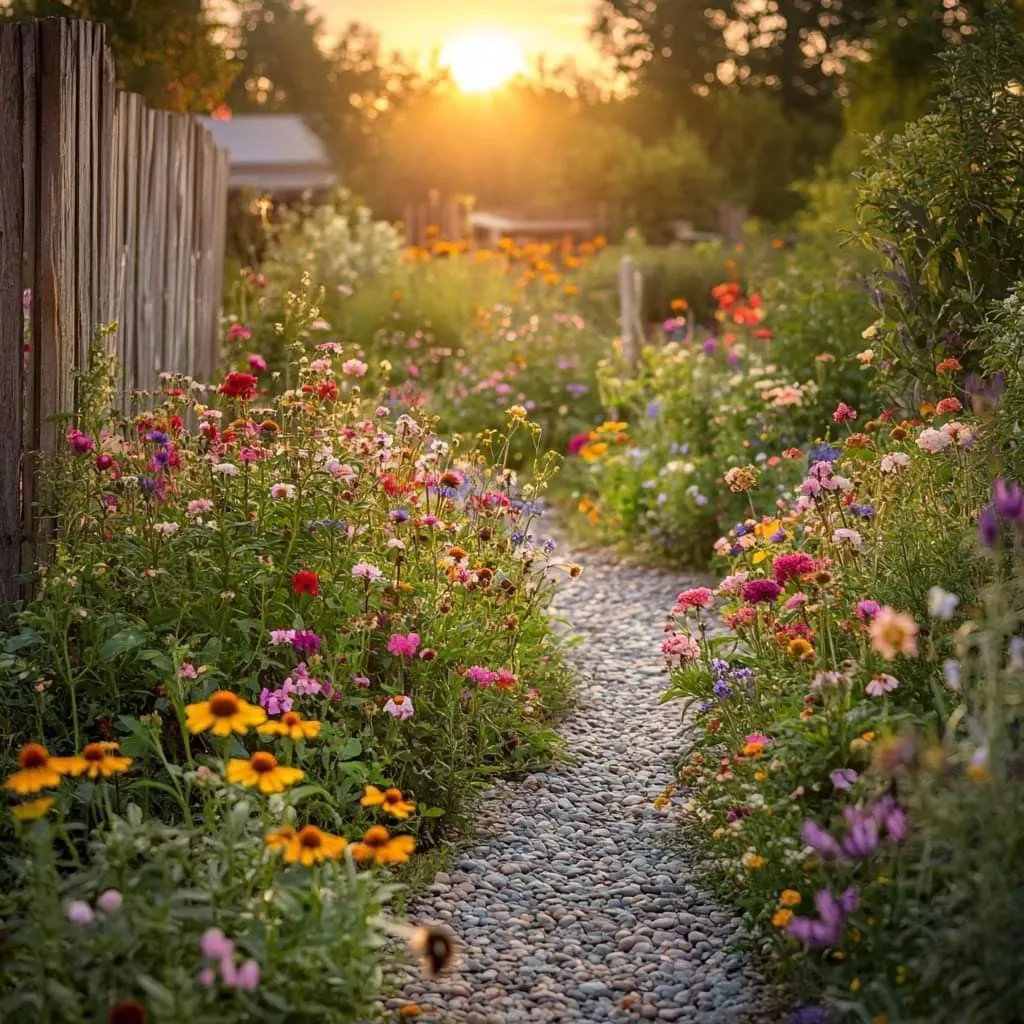
In fact, some of the most beautiful gardens I’ve seen in California are filled with native grasses, flowering shrubs, seasonal wildflowers, and dramatic evergreen foliage.
They’re soft. They’re romantic. And they change beautifully throughout the year. Exactly my kind of garden.
My Five Goals for Our Landscape Design
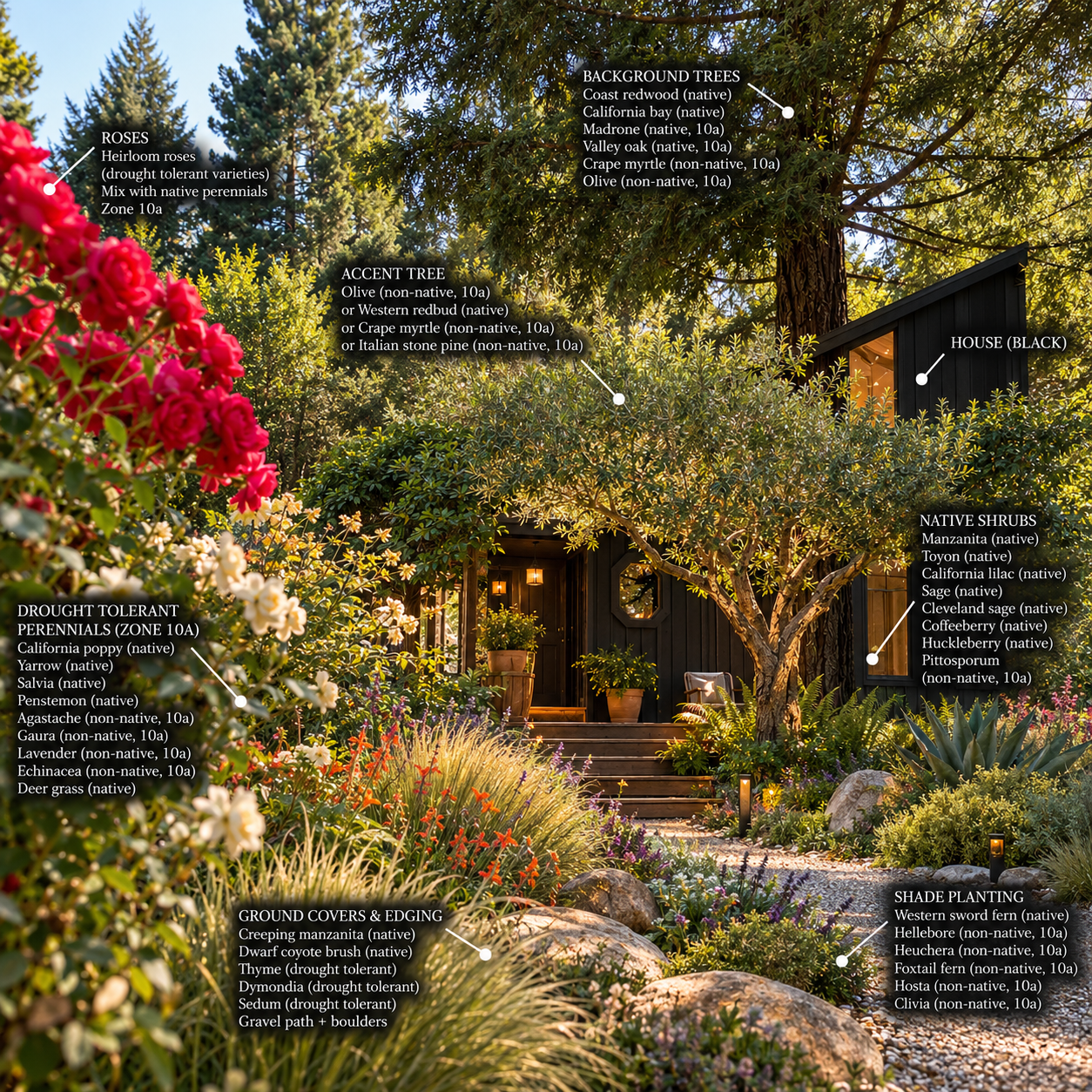
- Preserve what makes the property special. The redwoods, existing fruit trees, established roses, and natural woodland character aren’t going anywhere.
- Prioritize California native plants. I’m aiming for a predominantly native planting palette, with a few carefully chosen nonnative favorites.
- Reduce long-term water use. Plants will be grouped according to their sunlight and moisture needs, with efficient irrigation where necessary.
- Create distinct outdoor rooms. I want the meadows, orchard, studio, terraces, and cabin entrance to each feel intentional. A fire pit and a swing are also on the cards.
- Make it beautiful in every season. Evergreen structure, seasonal flowers, foliage texture, and winter interest all matter.
Start With the Landscape You Already Have
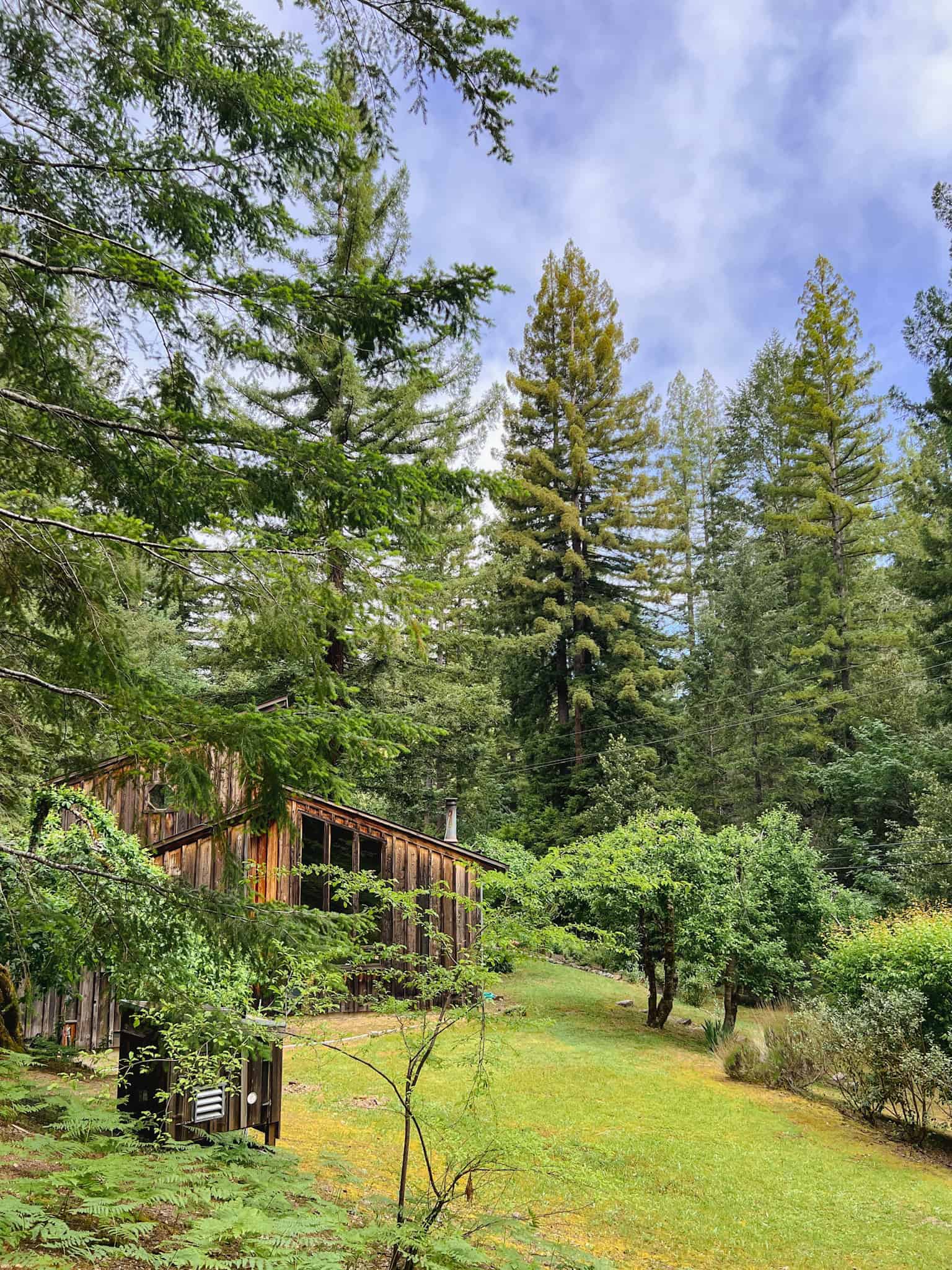
One of my biggest interior design philosophies is to start with what you own. The same principle applies outside. Before buying a single plant (or good houseplant), I looked at what was already working on our property.
We have enormous coast redwoods that create incredible architecture overhead. An apple tree that produces fruit. Roses. A creek. Areas of deep woodland shade and other spots that get generous afternoon sunshine.
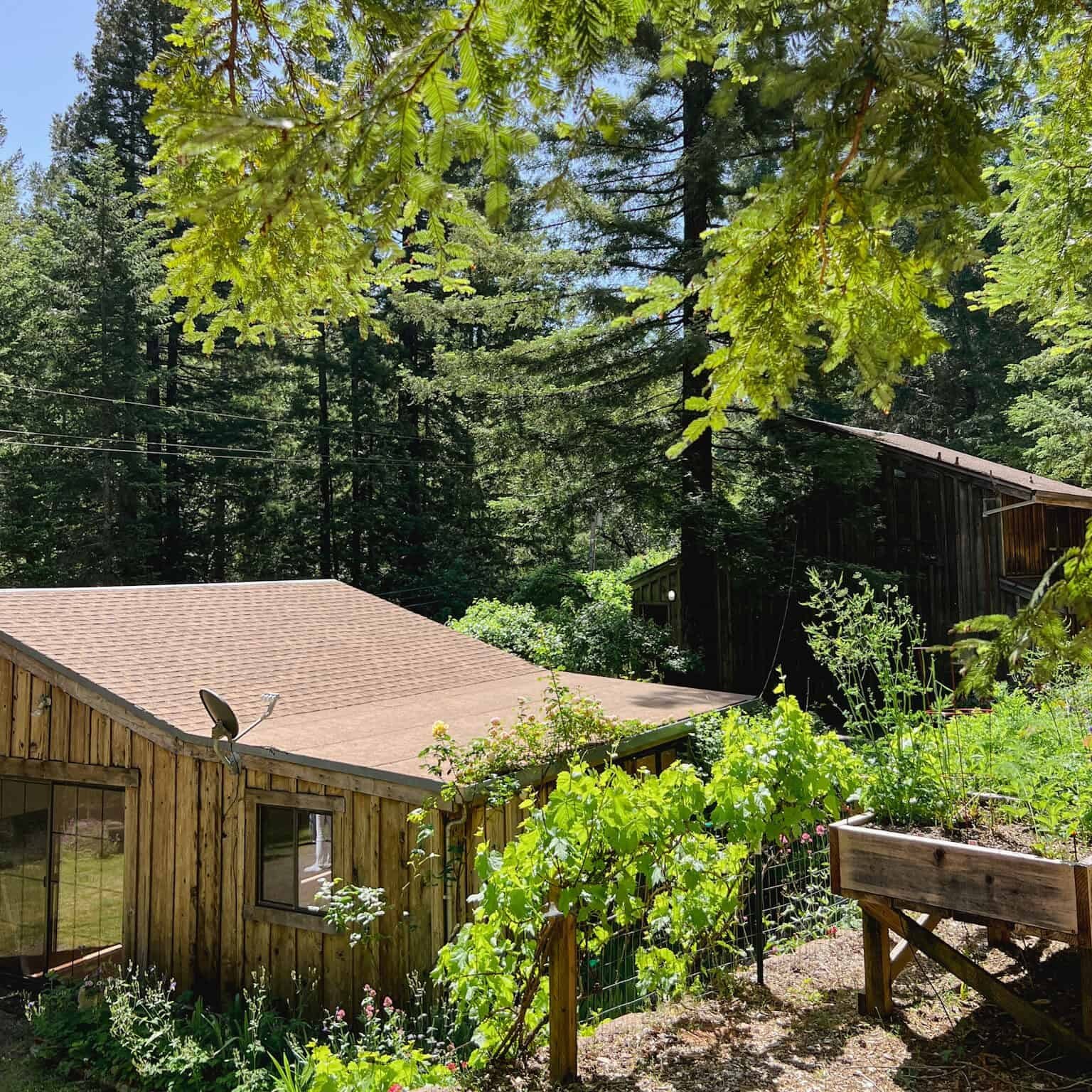
Instead of starting from scratch, I’m using those existing elements as the design’s foundation. The redwoods are the ceiling. The meadows are the open living spaces. The gravel paths connect everything.
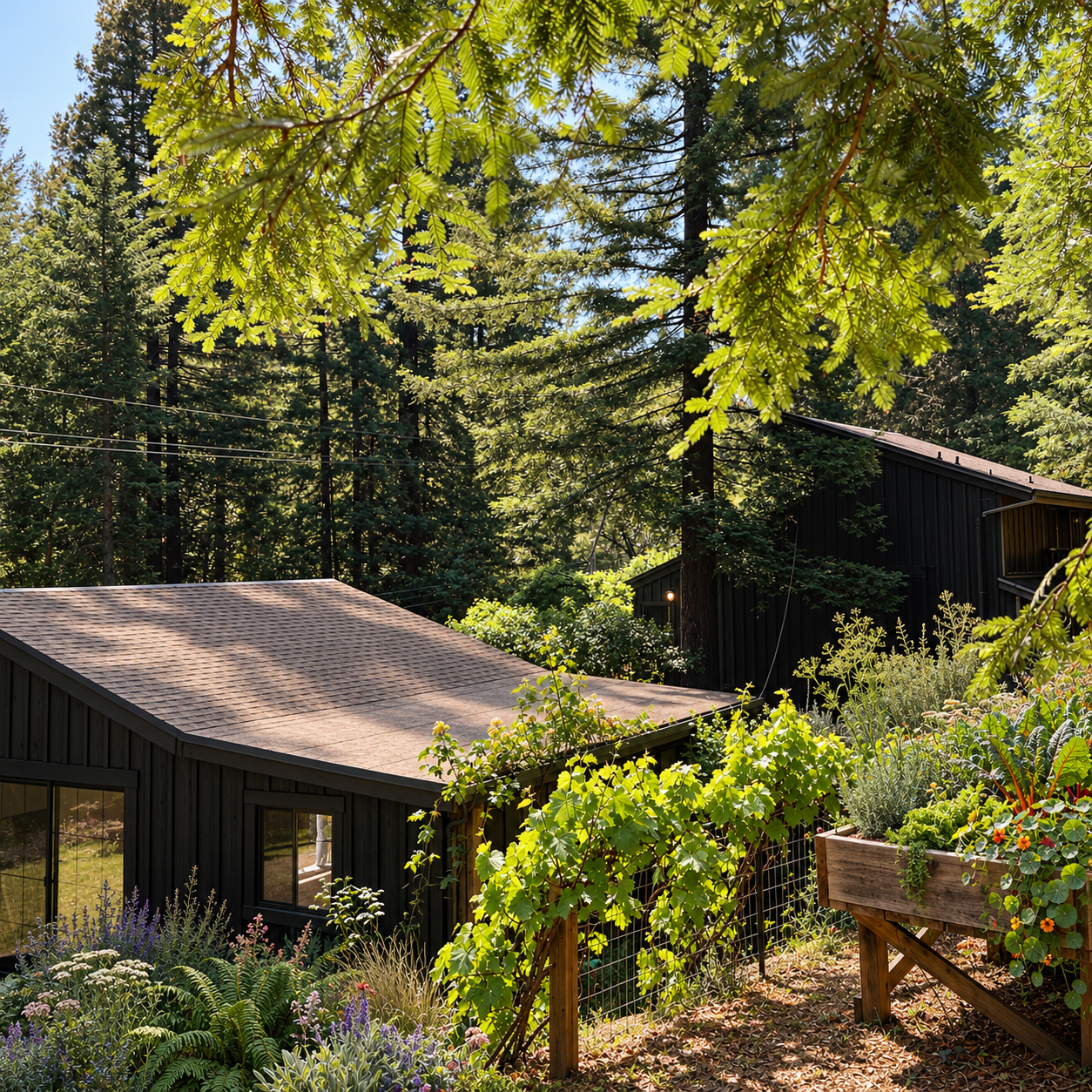
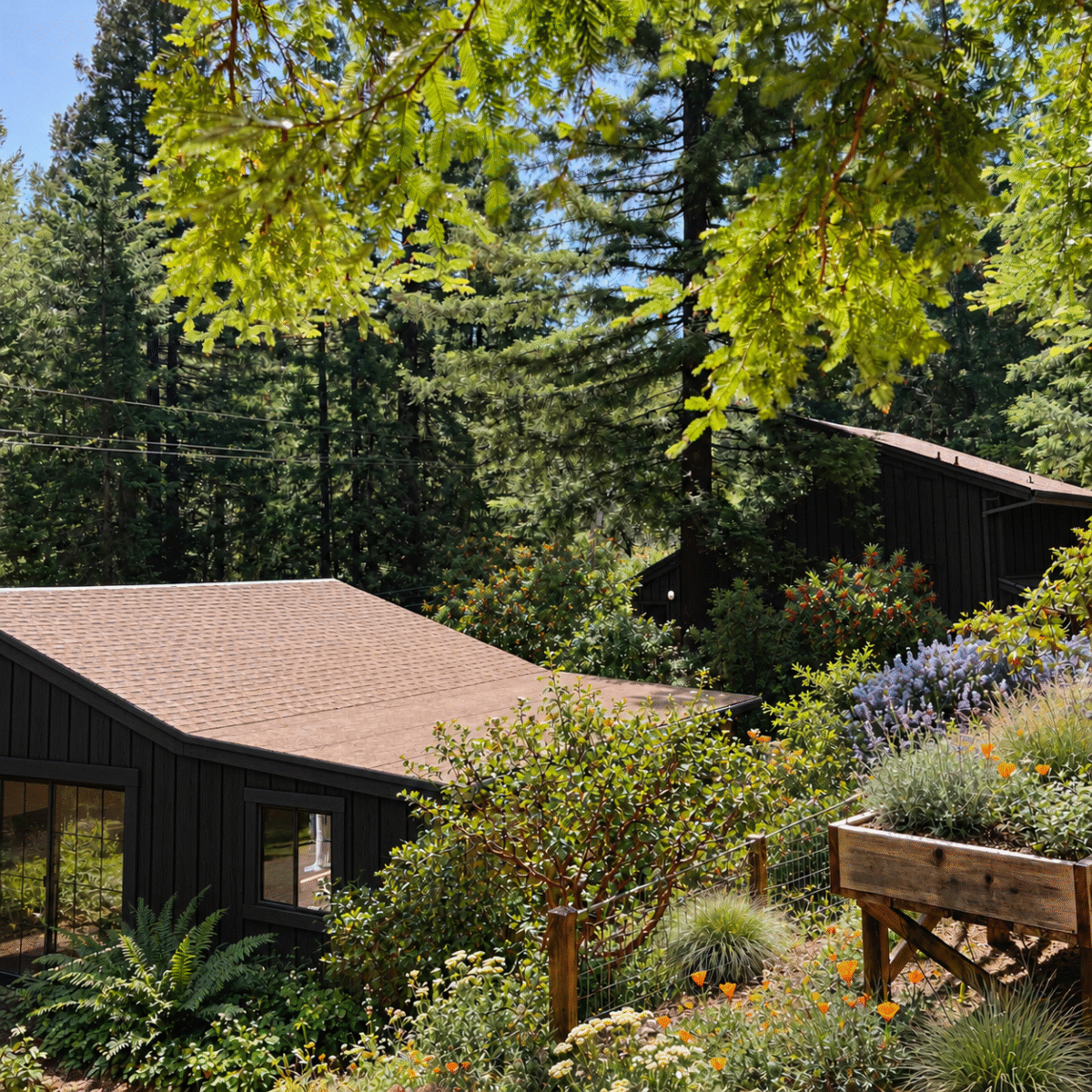
Once I started thinking about the garden like a series of rooms, the whole plan became much easier to visualize.
Our California Native Garden Design Plan
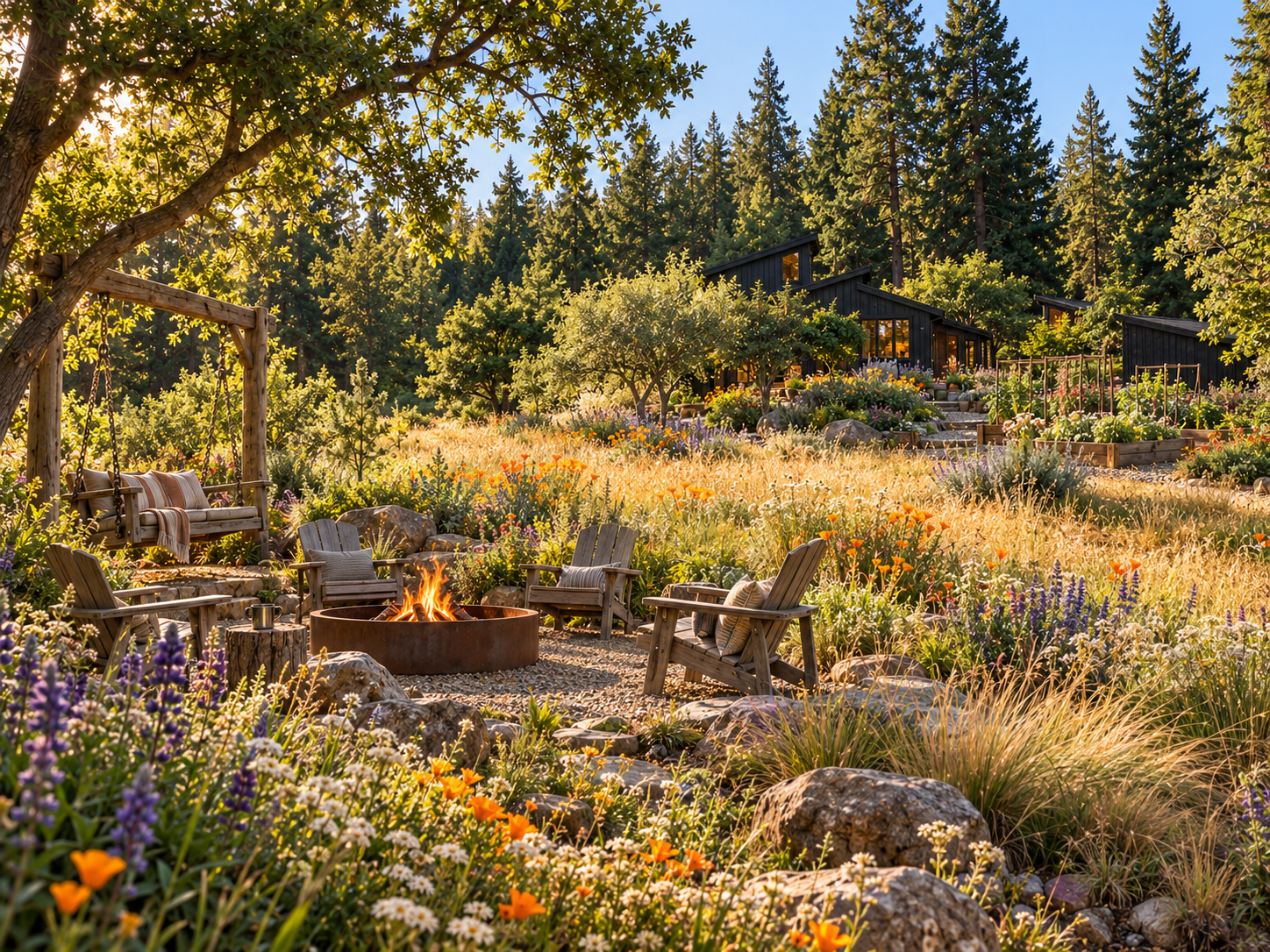
Our property falls within USDA Hardiness Zone 10a, but the real challenge is its microclimate variation. One area can be sunny and dry while another, just a few steps away, sits in deep redwood shade.
That’s why I’m designing the property in separate planting zones.
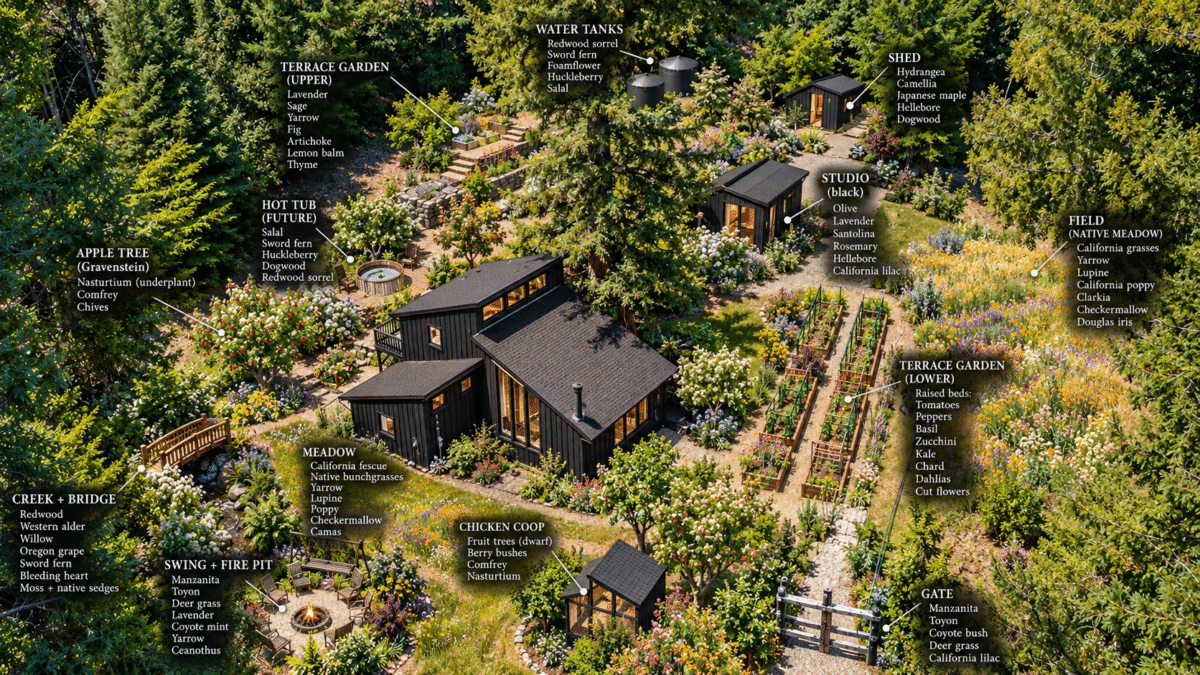
1. The Cabin Entrance: A Layered Woodland Garden
I want the approach to the cabin to feel a little mysterious.
You know that feeling when you follow a path through the trees and suddenly discover a beautiful house tucked into the landscape?
That.
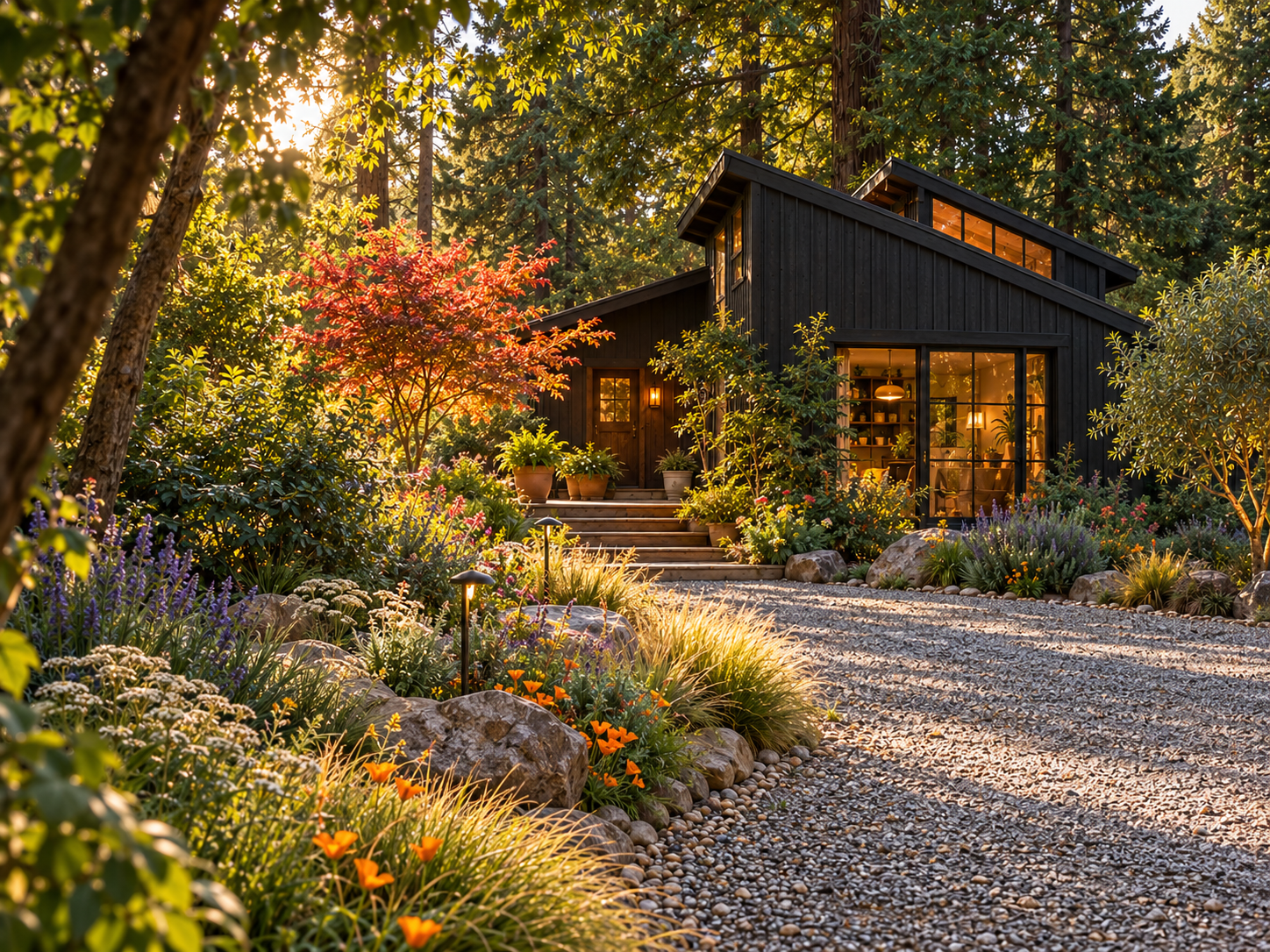
We’re planning to paint the cabin black, which will make the surrounding greenery look even richer. Around the entrance, I want to combine sculptural shrubs with soft, low-growing woodland plants.
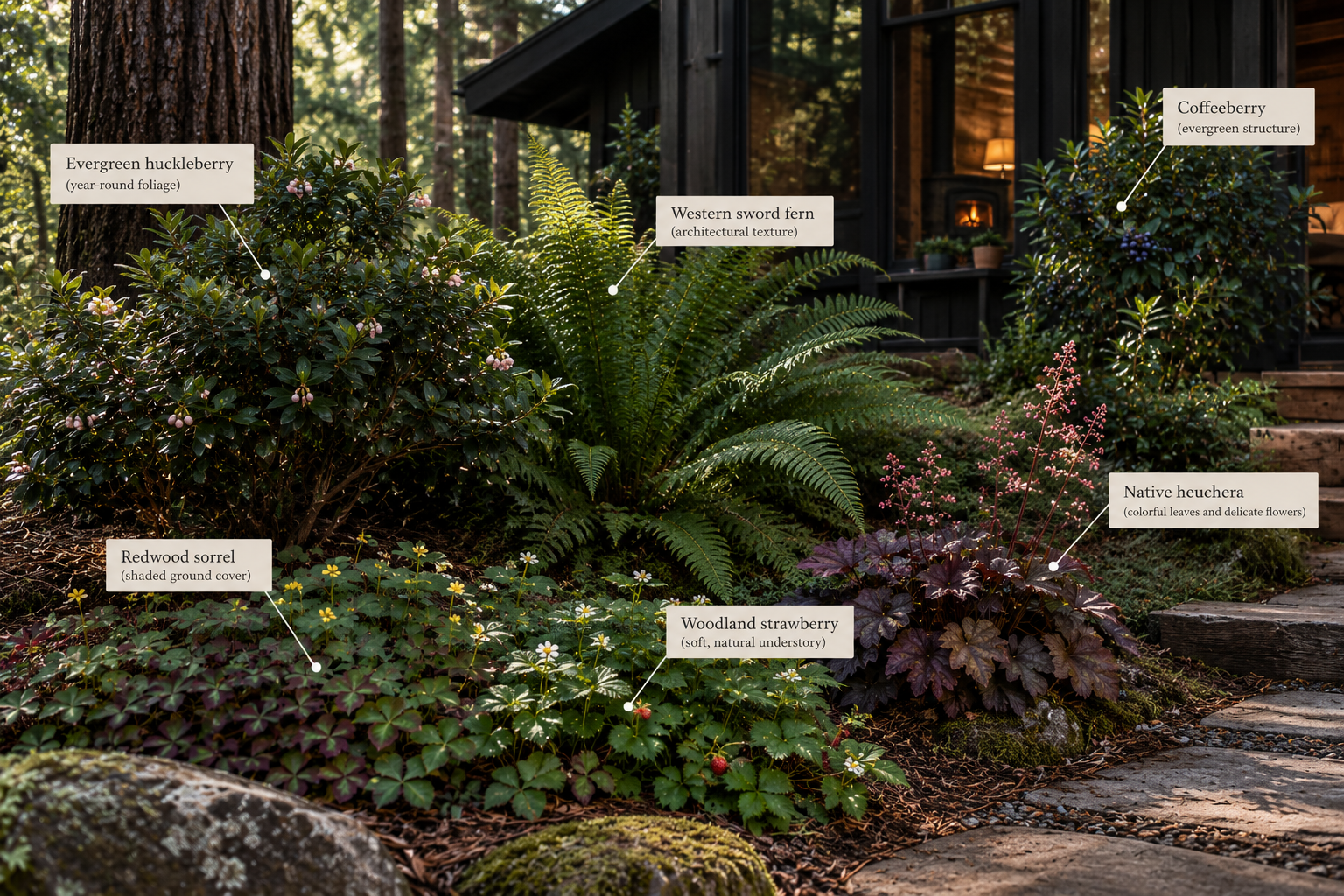
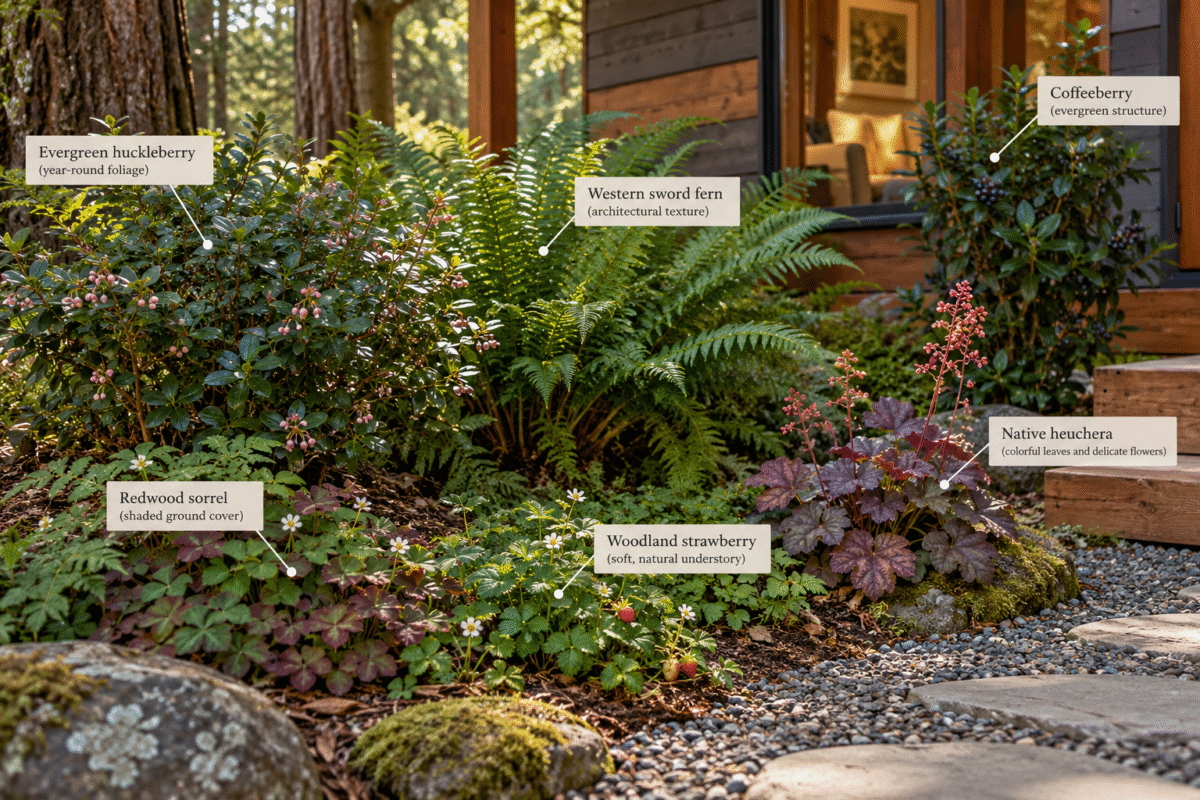
Plants I’m considering:
- Evergreen huckleberry for year-round foliage
- Western sword fern for architectural texture
- Redwood sorrel for shaded ground cover
- Woodland strawberry for a soft, natural understory
- Native heuchera for colorful leaves and delicate flowers
- Coffeeberry for evergreen structure
The trick here is repetition. Rather than buying one of everything at the nursery, which I am absolutely capable of doing, I’m planning larger groupings of fewer species.
It creates a calmer, more sophisticated landscape.
Tip
In shady gardens, focus on contrasting leaf shapes and textures rather than relying entirely on flowers.
And near the house, I’ll keep planting compatible with local wildfire defensible-space requirements rather than bringing dense shrubs directly against the siding.
2. The Art Studio: Drought Tolerant Plants With Architectural Structure
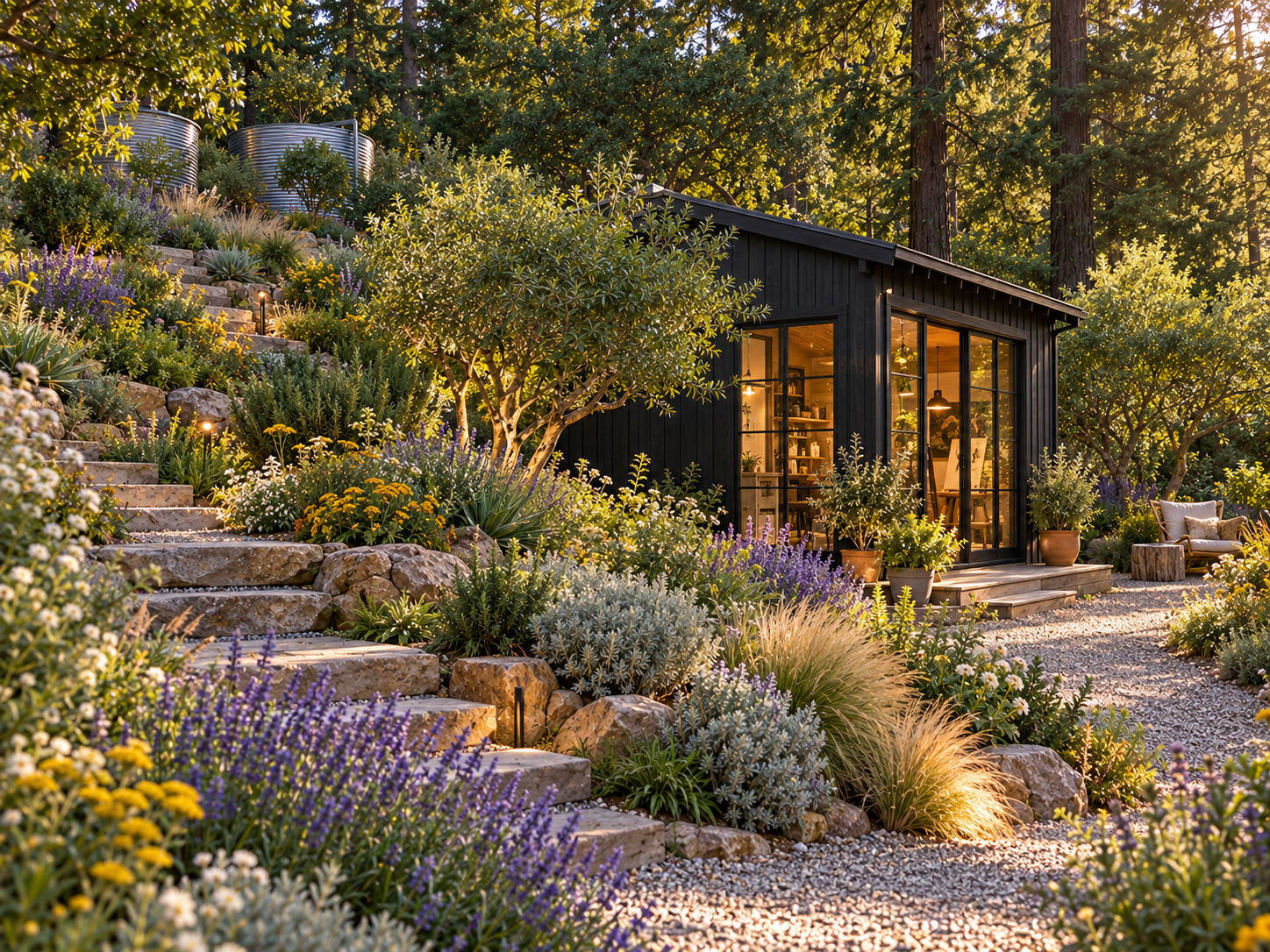
Our detached art studio is one of my favorite features on the property. Once its exterior is black, I want the landscaping to feel slightly more modern and sculptural.
This is where I’m leaning into the contrast between dark architecture and silvery California foliage.
My studio planting palette includes:
- Manzanita
- California lilac (Ceanothus)
- Native sage
- Deer grass
- California fescue
- Yarrow
- Lavender in sunny, well-drained locations
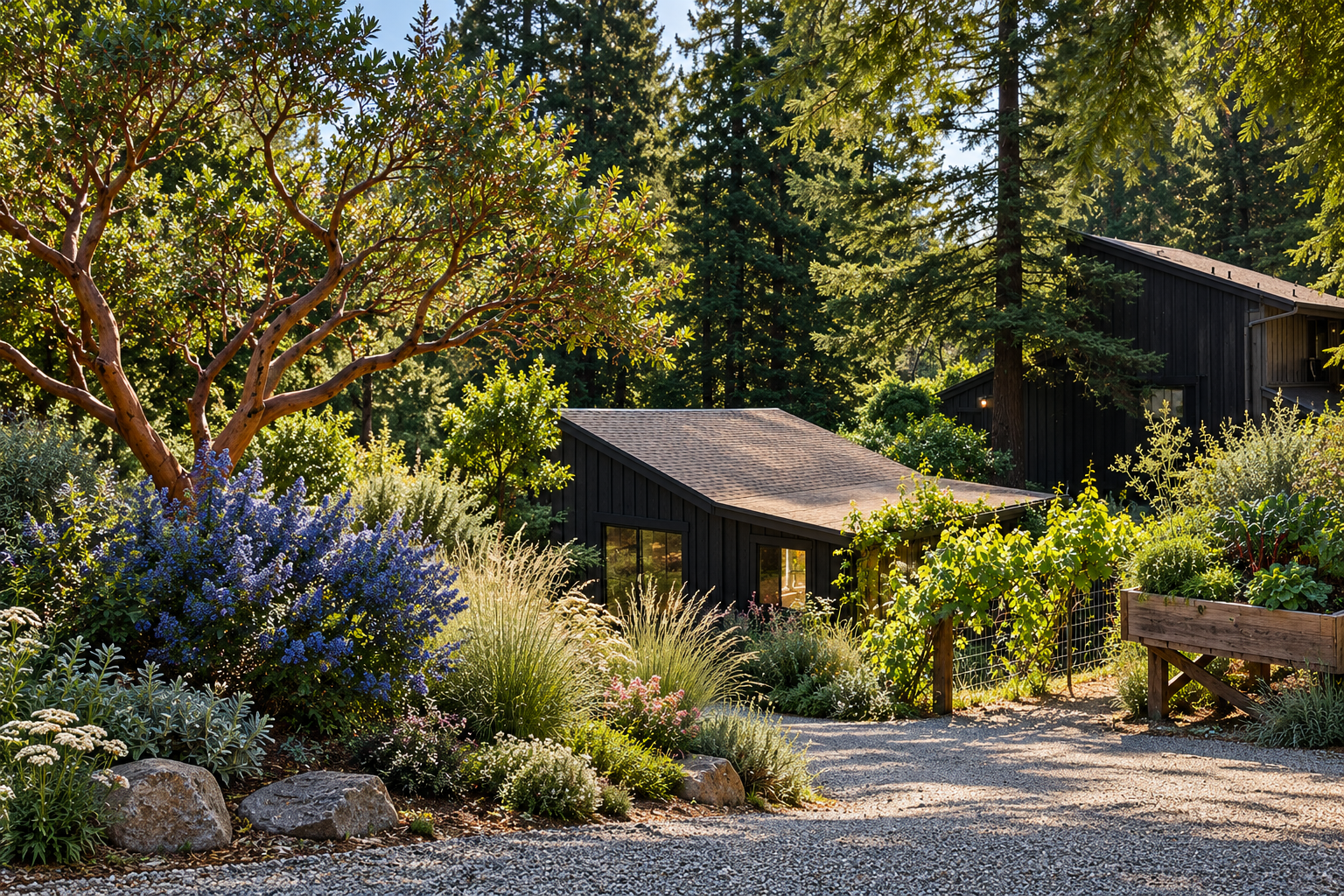
Manzanita is particularly exciting to me.
Its sculptural branching and reddish bark look almost like living art. Against black siding? Gorgeous. California lilac adds evergreen structure and beautiful spring flowers, while ornamental grasses soften the gravel driveway’s edges.
I’ll be selecting varieties appropriate to the actual sunlight and soil conditions rather than assuming every drought-tolerant plant will thrive beneath redwoods.
Tip
Combine three heights, low ground covers, medium flowering plants, and taller structural shrubs, to create a layered, not flat, garden.
3. The Meadows: A California Wildflower Garden
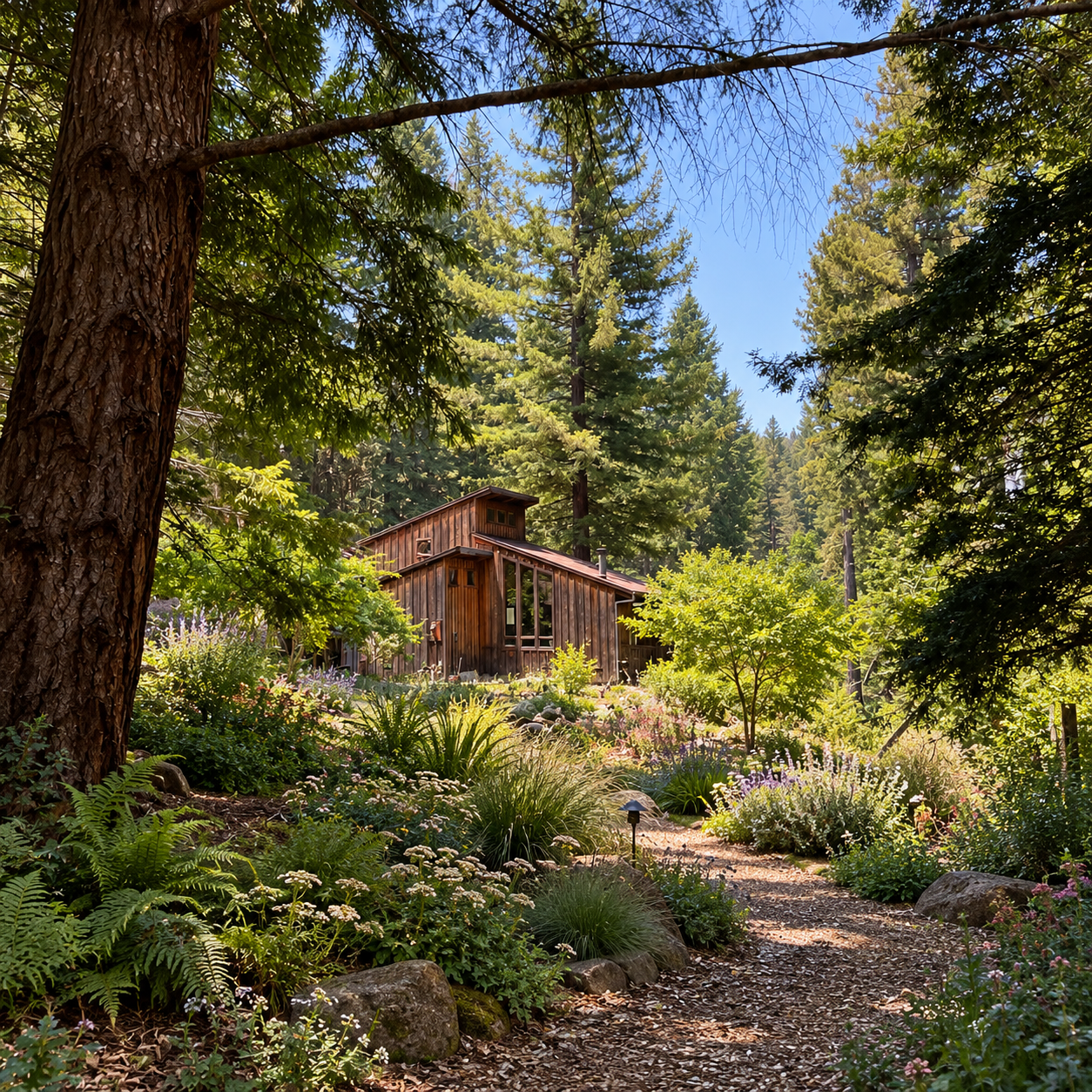
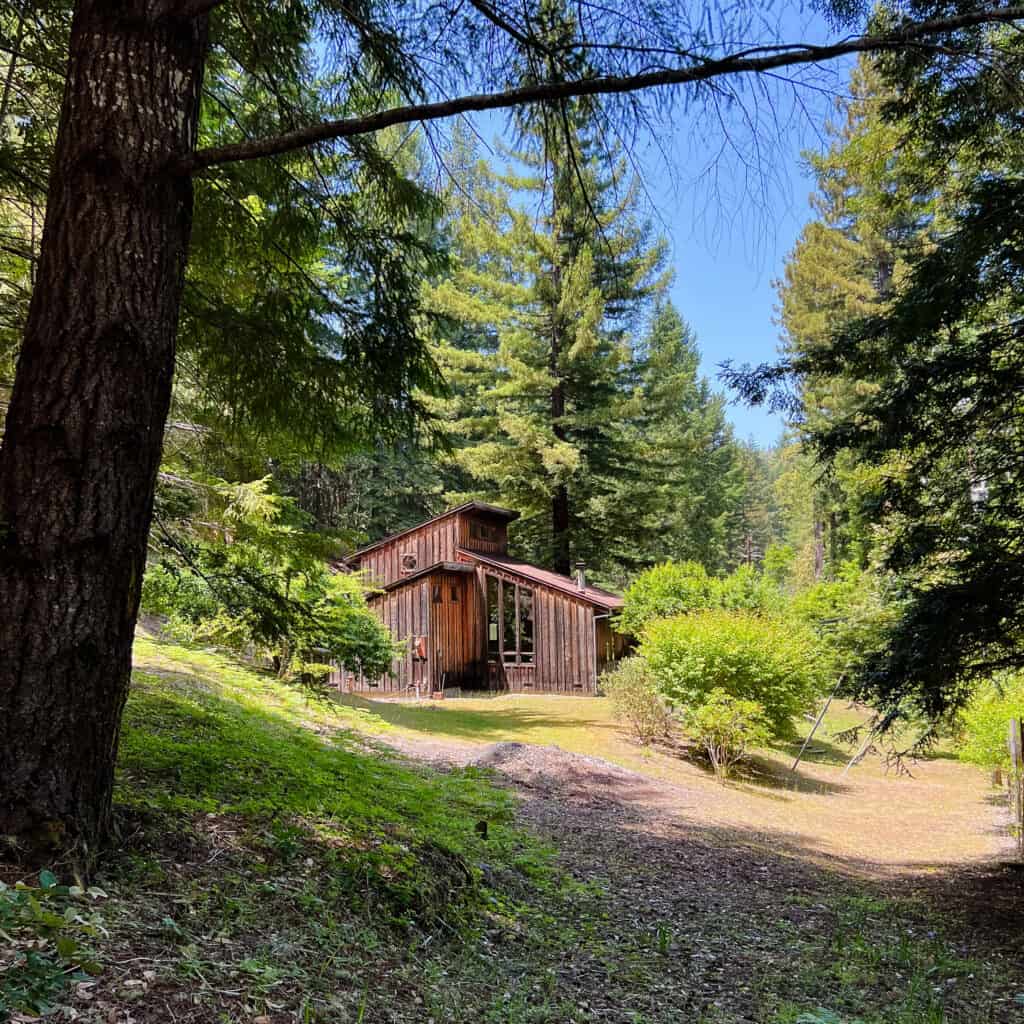
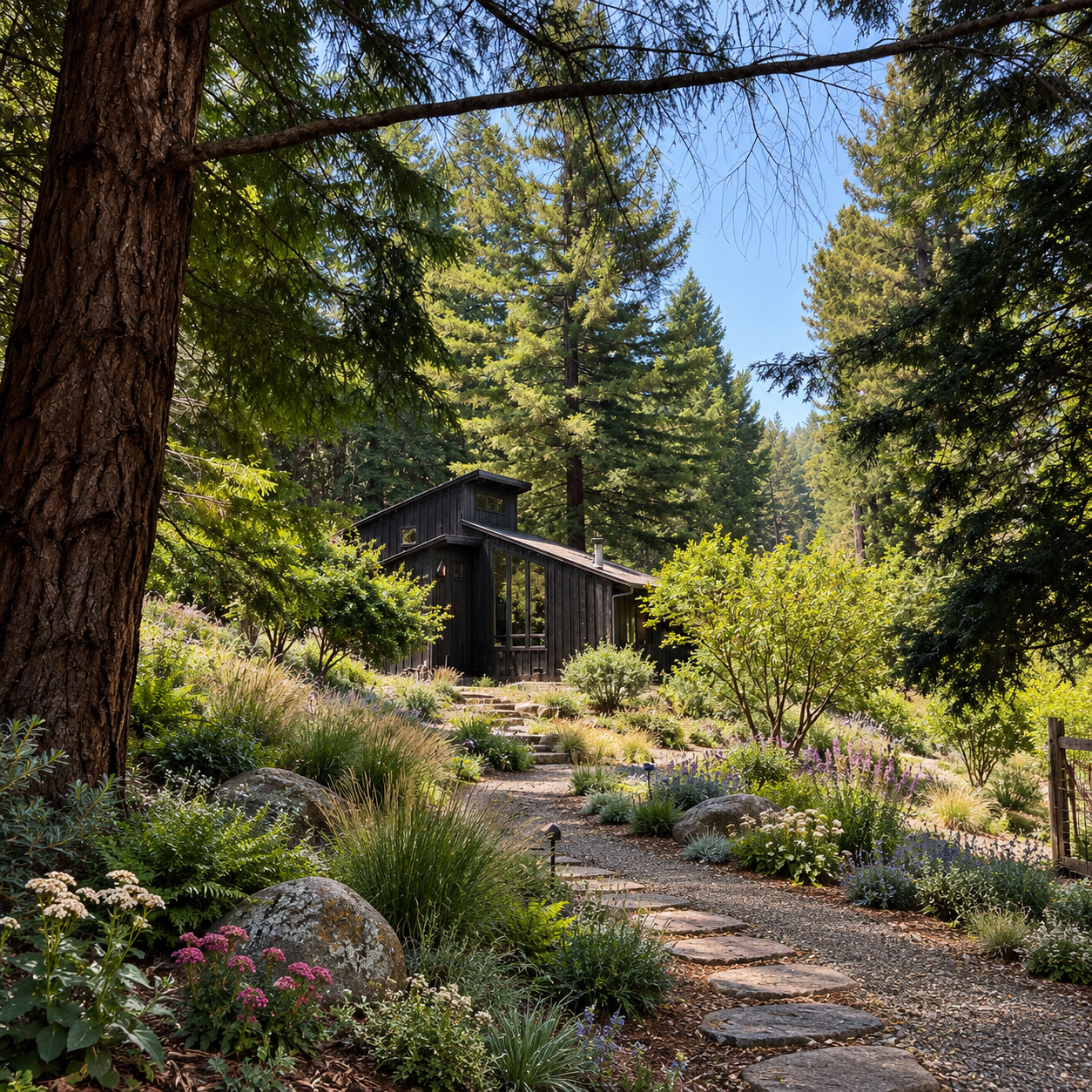
This might be the part of the project I’m most excited about.
We have two open meadow areas that currently feel a little undefined.
Instead of maintaining them as traditional lawn, I want to introduce native grasses and seasonal wildflowers.
Imagine golden grasses moving in the breeze, with California poppies and purple flowers appearing throughout the growing season.
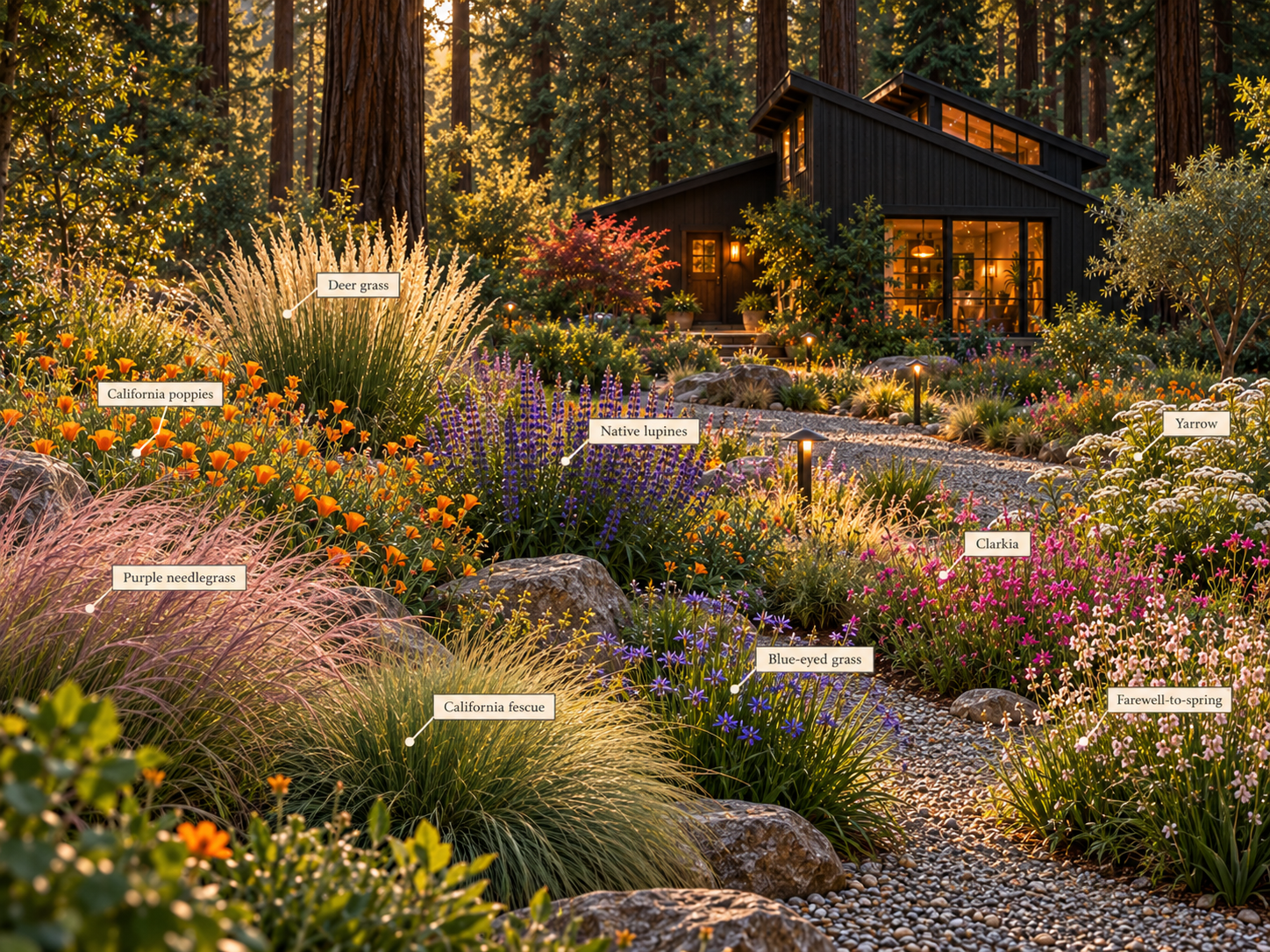
Our meadow planting list:
- California fescue
- Purple needlegrass
- Deer grass in selected accent groupings
- California poppies
- Native lupines
- Yarrow
- Clarkia
- Blue-eyed grass
- Farewell-to-spring
Not every species blooms at the same time, which is part of the appeal.I want the meadow to evolve through the seasons rather than looking identical every month.
And while established native meadows can require less irrigation than conventional lawns, they’re not entirely maintenance-free.We’ll need to manage weeds, establish the plants properly, and cut back vegetation seasonally.
Tip
Use native grass plugs for permanent structure and regionally appropriate wildflower seed for seasonal color.
4. The Orchard: Working With Our Existing Fruit Trees
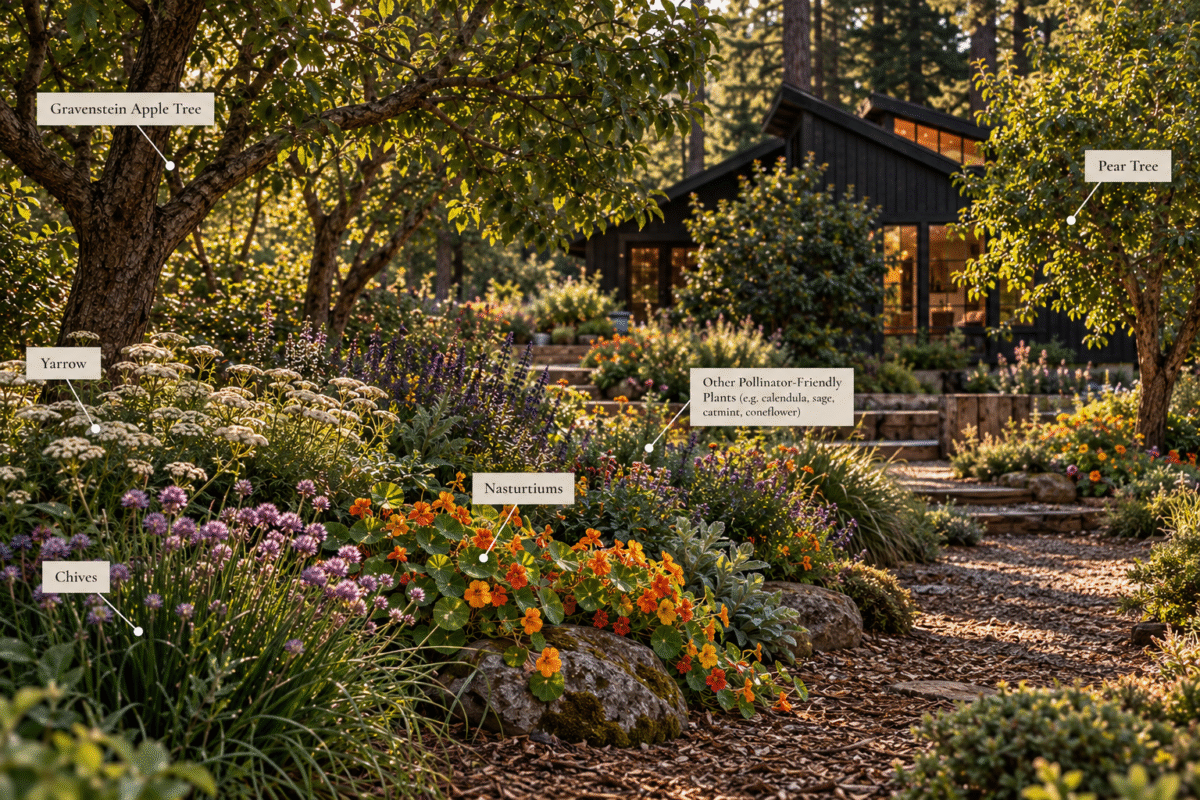
We already have a Gravenstein apple tree and a pear tree on the property. Every time I pick an apple from that tree, I remember why we bought this place. There’s something deeply satisfying about growing food where you live and making an apple crumble from your trees; it’s oh so satisfying.
My plan is to keep the orchard feeling informal, with simple underplanting that supports the garden without competing too aggressively with the trees.
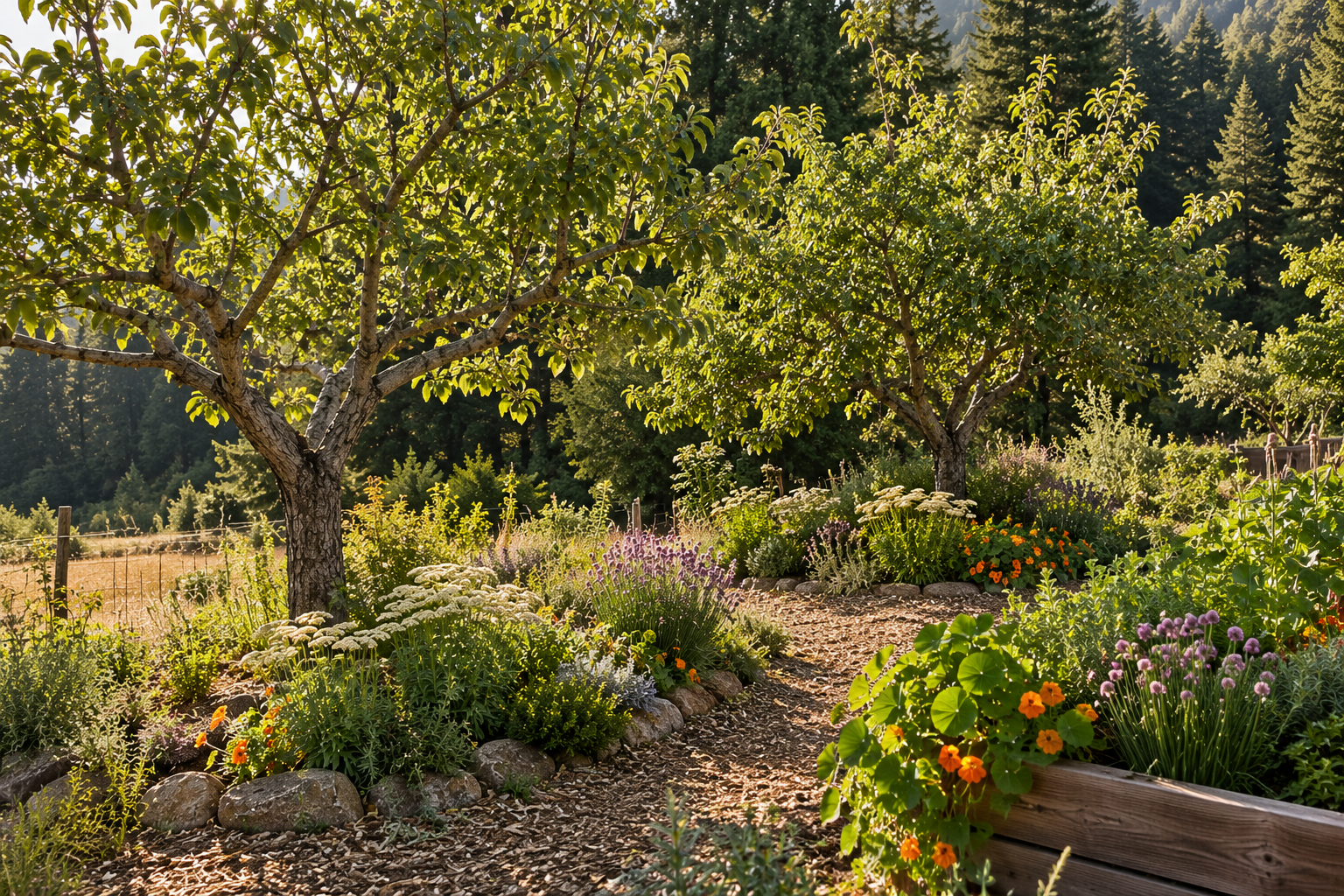
I’m considering yarrow, chives, nasturtiums, and other pollinator-friendly plants where conditions allow.
I also want to preserve easy access for pruning, harvesting, and collecting fallen fruit.
Because fruit trees generally need more water than established drought-tolerant natives, they’ll have their own irrigation requirements.
The goal isn’t to make everything survive on the same watering schedule. It’s to give each plant what it actually needs.
5. The Terraced Gardens: Edible Meets Ornamental
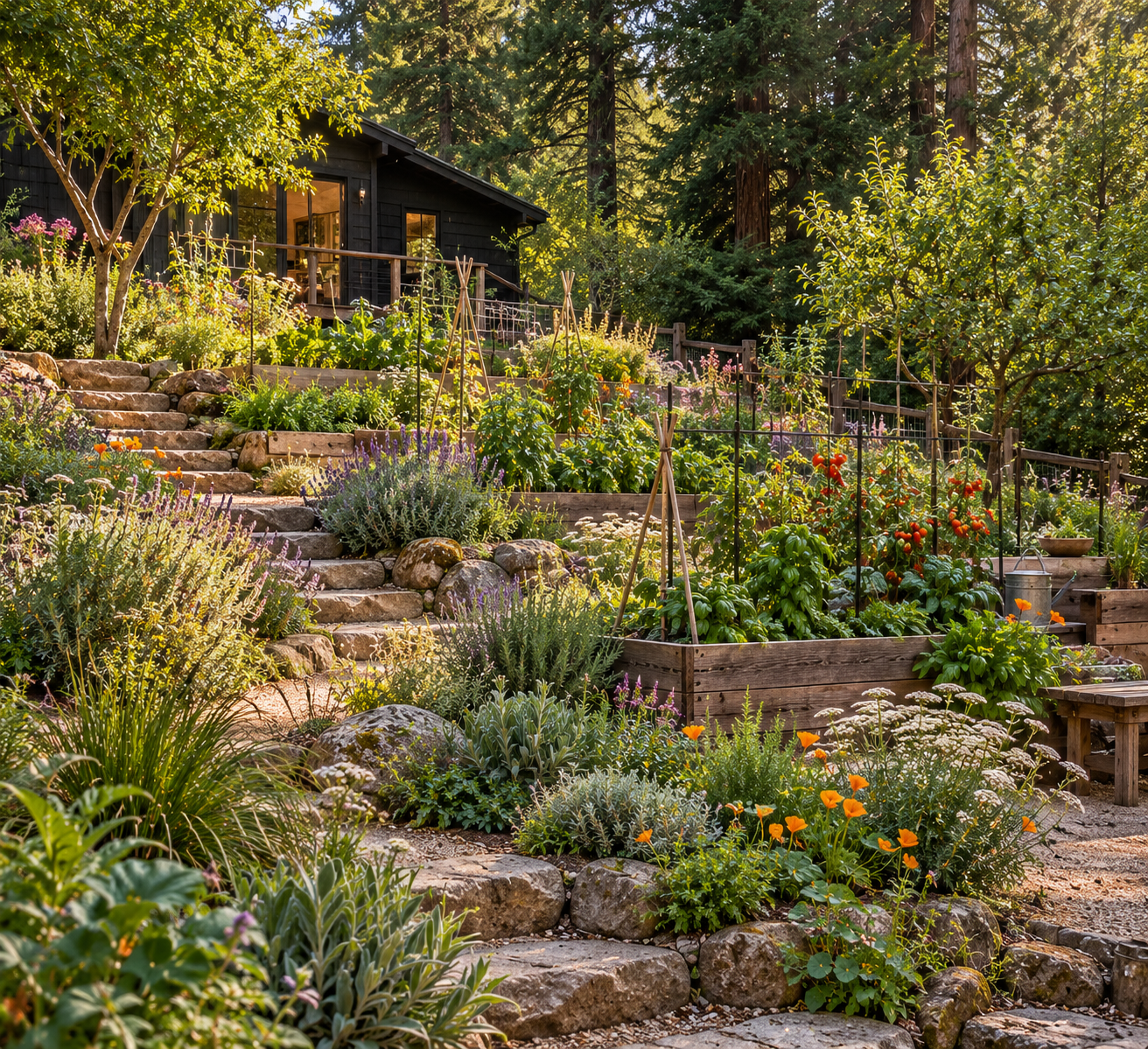
Our terraced gardens are an opportunity to blend food production with landscape design. I’m keeping the vegetable beds, but I want the surrounding areas to feel more cohesive. Think tomatoes and basil growing alongside sage, yarrow, lavender, and California buckwheat.
I’m also interested in repeating a few plants throughout the terraces so the entire garden feels connected. This is where my interior design brain takes over. You wouldn’t decorate every room of your house with a completely unrelated palette.
Why would you do that in the garden?
Tip
Choose a limited color palette and repeat it across different planting zones.
For our property, I’m leaning into silver-green foliage, soft purple, creamy white, golden grasses, and occasional bursts of orange and pink.
6. The Creek and Bridge: Preserving the Woodland Character
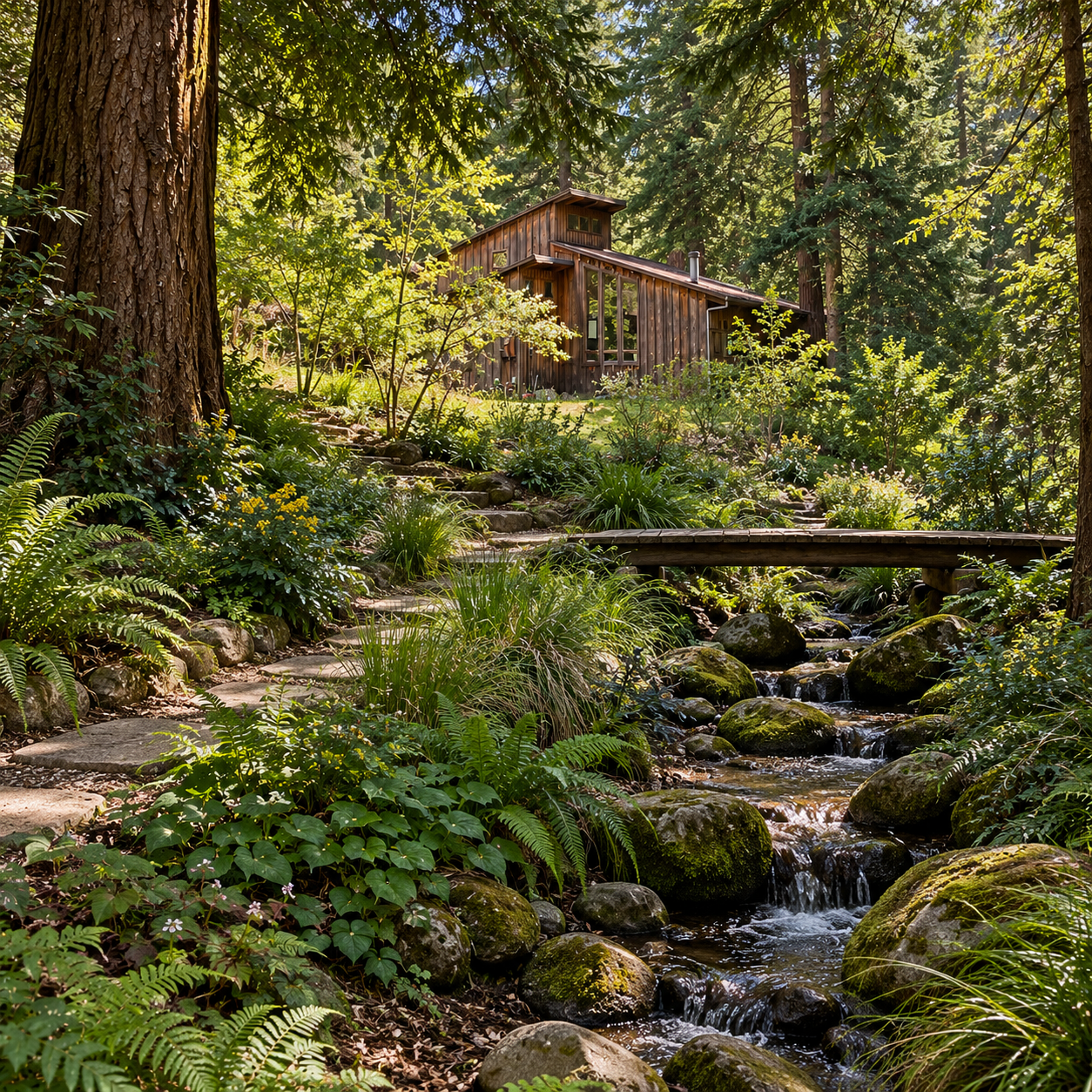
We have a small creek running through the property with a bridge crossing over it. It’s one of those details that makes the place feel magical.
I don’t want to overdesign this area.
Instead, I’d like to enhance the existing woodland character with native plants suited to its moisture and shade conditions. Western sword fern, Oregon grape, redwood sorrel, native sedges, and California wild ginger are all possibilities depending on the exact site.
The priority here is preserving the creek ecosystem and minimizing disturbance. We’ll also check any applicable creek setbacks or permitting requirements before making changes near the water.
Sometimes the best landscape design decision is knowing when to leave something alone.
The Best Drought Tolerant Plants for Our California Garden
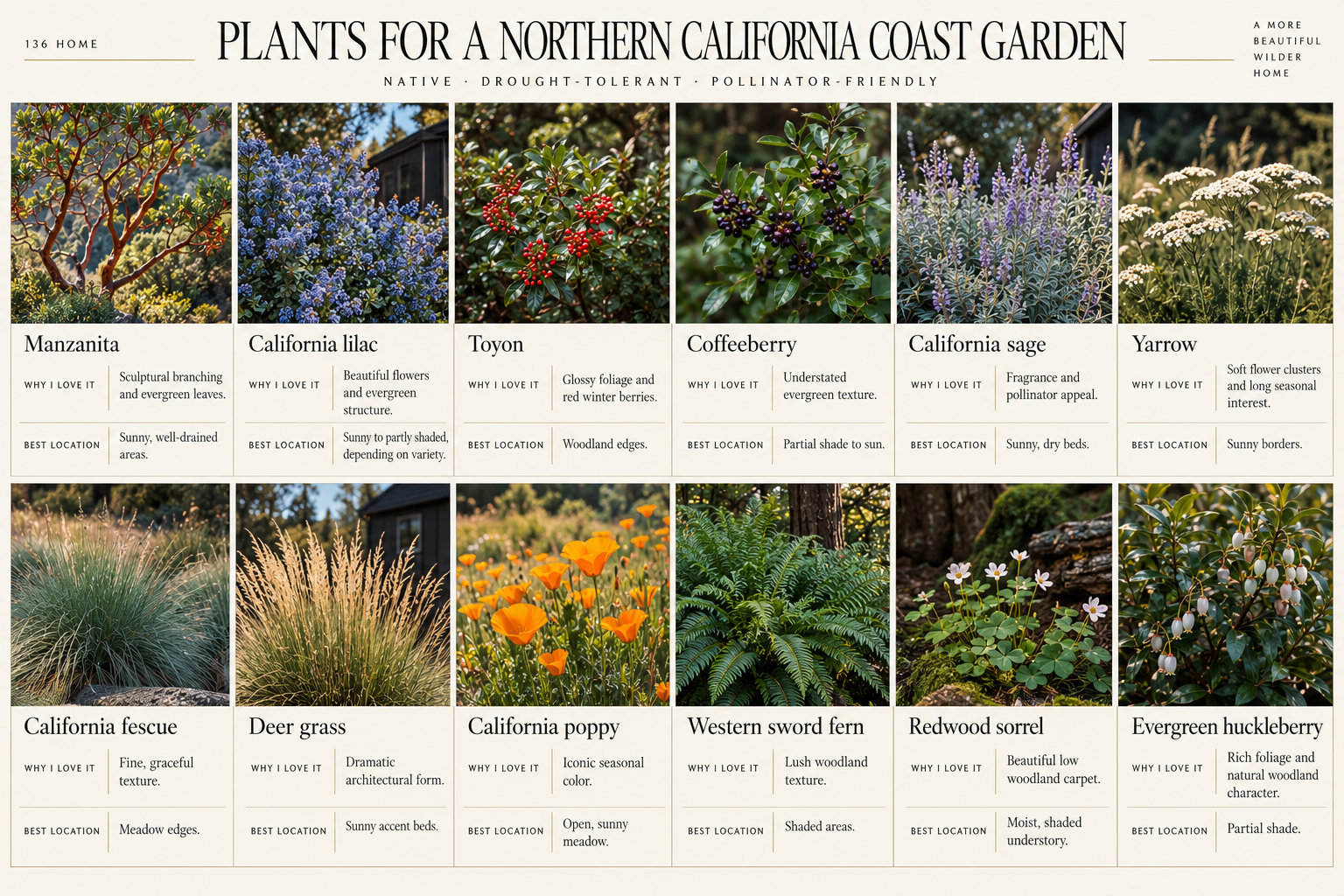
If you’re planning your own low-water landscape, these are the plants I’m especially interested in using.
| Plant | Why I Love It | Best Location |
|---|---|---|
| Manzanita | Sculptural branching and evergreen leaves | Sunny, well-drained areas |
| California lilac | Beautiful flowers and evergreen structure | Sunny to partly shaded, depending on variety |
| Toyon | Glossy foliage and red winter berries | Woodland edges |
| Coffeeberry | Understated evergreen texture | Partial shade to sun |
| California sage | Fragrance and pollinator appeal | Sunny, dry beds |
| Yarrow | Soft flower clusters and long seasonal interest | Sunny borders |
| California fescue | Fine, graceful texture | Meadow edges |
| Deer grass | Dramatic architectural form | Sunny accent beds |
| California poppy | Iconic seasonal color | Open, sunny meadow |
| Western sword fern | Lush woodland texture | Shaded areas |
| Redwood sorrel | Beautiful low woodland carpet | Moist, shaded understory |
| Evergreen huckleberry | Rich foliage and natural woodland character | Partial shade |
One important thing I’ve learned: drought tolerant does not mean every plant wants the same conditions.
A manzanita in dry, well-drained soil has very different needs from redwood sorrel growing beneath a shaded forest canopy.
I’ll be designing around those differences rather than forcing a single irrigation strategy across the property.
Can You Mix Native and Nonnative Plants?
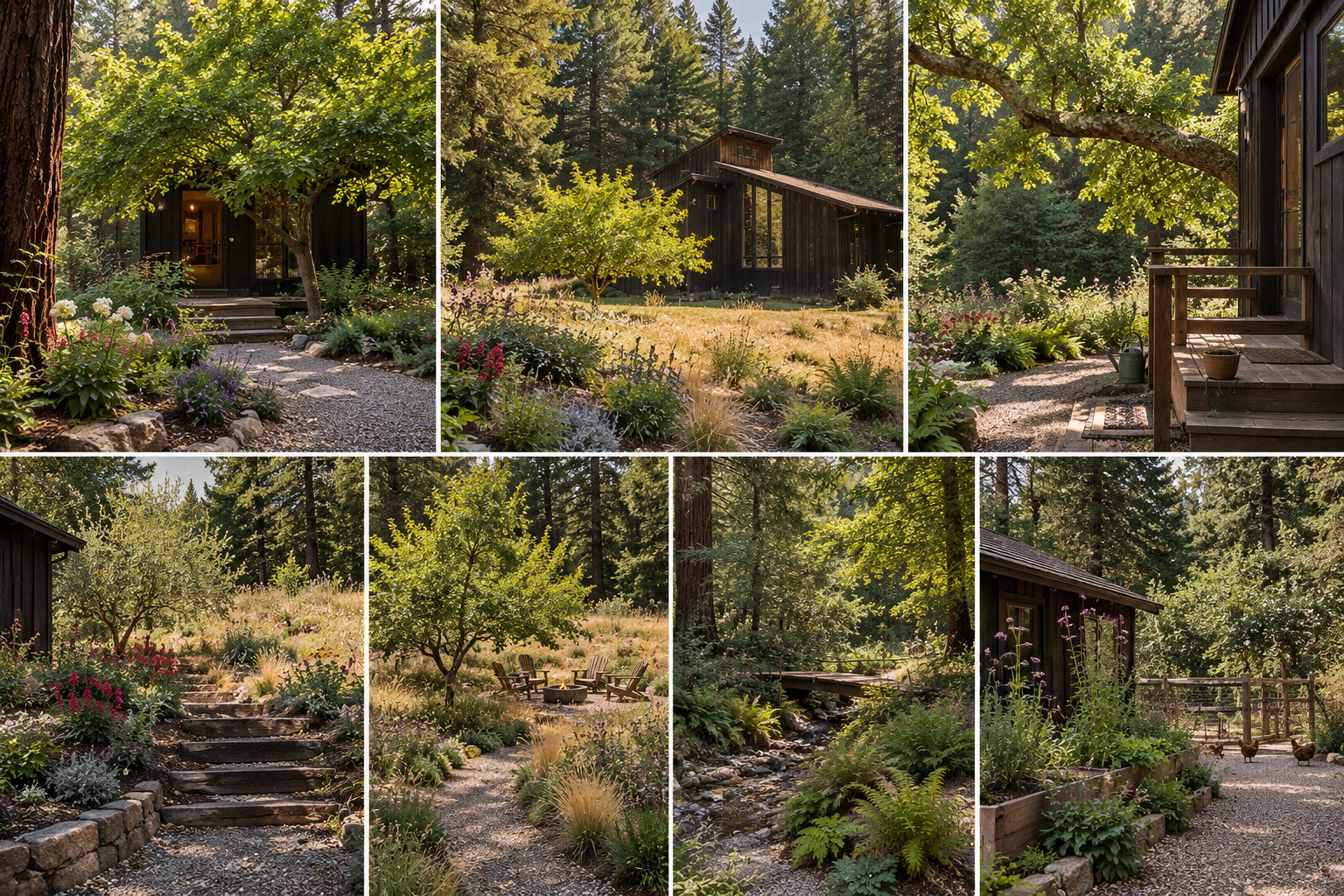
Absolutely.
While I want most of our new landscaping to feature California natives, I also love certain nonnative plants.
Lavender, olive trees, and our existing heirloom roses bring something special to the garden.
I’m not getting rid of the roses just because they aren’t native.
Some things deserve to stay.
The important part is choosing noninvasive plants that are suited to the site and keeping their water needs in mind.
My working goal is an approximately 80/20 native-to-nonnative planting mix, but the final selection will depend on actual site conditions.
How Much Does Drought Tolerant Landscaping Cost?
Now for the question everyone wants answered.
What does a project like this actually cost?
We’re working with approximately 0.73 acres, but we aren’t planning to replant every square foot.
Most of the existing forest will remain undisturbed.
Instead, the investment will focus on the cabin entrance, studio, driveway, meadows, terraces, and selected garden paths.
Here’s my preliminary budget:
| Expense | Estimated Cost |
|---|---|
| Plants and native wildflower seed | $6,500 |
| Irrigation and components | $2,500 |
| Mulch and soil amendments | $1,200 |
| Gravel, stone edging, and boulders | $2,500 |
| Planting labor and contractor assistance | $3,000 |
| Delivery and miscellaneous supplies | $800 |
| Contingency | $2,500 |
| Total Estimated Budget | $19,000 |
These are planning estimates, not final quotes or actual project expenses.
A more budget-conscious DIY version might come in around $8,000–$13,000, while a professional installation with substantial hardscaping could cost significantly more.
The biggest opportunities to save money are buying smaller plants, using native seed for meadow areas, preserving existing features, and tackling the work in phases.
How We’re Phasing the Landscape Renovation
I don’t plan to tackle everything at once.
That would be a lot of work, even by our standards.
Here’s the order I’m considering:
Phase One: House and Studio: Approximately $7,000
Focus on the areas that will make the biggest immediate visual impact, including the studio borders, cabin approach, structural shrubs, and initial irrigation.
Phase Two: Meadows and Orchard: Approximately $4,000
Introduce native grasses and wildflowers, refine the orchard underplanting, and begin replacing selected lawn areas.
Phase Three: Terraces and Paths: Approximately $5,000
Improve the transitions between the edible gardens, gravel paths, and surrounding landscape.
Phase Four: Woodland Finishing: Approximately $3,000
Fill in shaded garden areas, refine creek-side planting where appropriate, and complete the remaining details.
I like this approach because each phase should make the property feel more complete without requiring us to finish the entire project at once.
And, as anyone who has renovated a house knows, sometimes the budget has other plans.
How to Design Your Own Drought Tolerant Landscape
You don’t need three-quarters of an acre to use these ideas.
Whether you’re landscaping a small backyard or a larger property, I’d approach the process in this order.
Step 1: Study Your Existing Landscape
Before removing anything, identify your existing trees, established plants, sunny areas, shaded areas, and drainage patterns.
Good landscape design begins with observation.
Step 2: Decide How You Want to Use the Space
Do you want somewhere to entertain? A vegetable garden? A quiet reading spot? A path through a meadow?
Start with the activities, then design the planting around them.
Step 3: Choose Your Structural Plants
These are the trees, shrubs, and evergreen plants that give the garden its shape year-round.
Think of them like the sofa and larger furniture pieces in a living room.
Step 4: Layer in Texture and Seasonal Color
Once the structure is established, introduce grasses, flowering perennials, and ground covers.
Vary plant heights and leaf shapes while repeating a consistent palette.
Step 5: Group Plants by Water Needs
Keep plants with similar irrigation requirements together.
This makes watering more efficient and gives each species a better chance of thriving.
Step 6: Plan for Mature Size and Fire Safety
A little one-gallon shrub may eventually become much larger than you expect.
Research mature sizes, leave adequate room for growth, and follow local defensible-space requirements around structures.
Step 7: Plant in Phases
You don’t need to buy everything in one weekend.
In fact, planting gradually allows you to see what works before making a larger investment.
And for many California native plants, fall and the beginning of the rainy season can be an excellent time to establish new plantings.
Common Drought Tolerant Landscaping Mistakes to Avoid
There are a few mistakes I’m specifically trying to avoid with our cabin garden.
- Planting too densely. Small nursery plants can look sparse at first, but crowding them creates problems once they mature.
- Treating every drought-tolerant plant the same. Sun exposure, soil drainage, and establishment watering matter just as much as the hardiness zone.
- Overwatering established native plants. Some California natives are sensitive to frequent summer irrigation, particularly in poorly drained soils.
- Ignoring shade. Plants that thrive in full sun may struggle beneath redwoods.
- Forgetting maintenance and fire safety. Native gardens still require seasonal care, weed control, and vegetation management.
The goal isn’t zero maintenance. It’s a more thoughtful garden that works with its environment.
Frequently Asked Questions
What is the best drought tolerant landscaping for California?
A mix of locally appropriate native shrubs, grasses, perennials, and ground covers is a great starting point. Manzanita, California lilac, native sage, yarrow, and California fescue are some of my favorites, provided they’re matched to the site.
Can a drought tolerant garden still look lush?
Absolutely. Layering evergreen shrubs, ornamental grasses, flowering plants, and contrasting foliage creates a garden that feels full and romantic without relying on a traditional lawn.
What plants grow well in Zone 10a?
Many California natives and Mediterranean-climate plants can grow in Zone 10a, including selected manzanitas, ceanothus, sages, lavender, and olive trees. The best choices still depend on local rainfall, soil, drainage, sunlight, and summer temperatures.
What grows under redwood trees?
Western sword fern, redwood sorrel, evergreen huckleberry, and other woodland natives can be good options, depending on moisture and shade. Protecting the redwoods’ roots is especially important.
How much does it cost to replace a lawn with native plants?
Costs vary enormously depending on the area, plant sizes, irrigation, site preparation, and whether you do the work yourself. Seeding a meadow can cost much less than installing hundreds of mature plants.
Do California native plants need watering?
Yes, especially while they’re becoming established. Once established, many require less supplemental irrigation than conventional landscaping, but the exact amount depends on the species and location.
Is fall a good time to plant California natives?
Often, yes. Fall planting allows many native plants to take advantage of cooler temperatures and winter rainfall while establishing their roots before summer.
The Garden I Hope We Grow Into
One of the things I love most about our cabin is how different it feels from our life in San Francisco.
Everything slows down here.
There’s something grounding about walking outside in the morning, checking the apple tree, hearing the creek, and looking up at redwoods that have been standing long before we arrived.
When we bought this place, I knew the house needed work.
I didn’t realize how much the land would become part of the story.
The more time we spend here, the more I understand that creating a home isn’t just about what happens inside four walls.
It’s about the spaces between them, too.
The path you take to the front door. The flowers you see from the kitchen window. The place you sit with your coffee while the dogs explore the garden.
Those moments matter.
I don’t need the landscape to look perfect.
I want it to feel alive, a little wild, and deeply connected to this beautiful corner of Northern California.
And if we can make it more sustainable, easier to maintain, and even more welcoming to the wildlife that already calls this place home?
Even better.
I’ll be sharing the planting process, what we spend, what works, and probably a few things that don’t.
Because if this cabin has taught me anything, it’s that the best spaces are never really finished.
And I think that’s what makes them worth loving.











One thing I’m learning through this process: drought-tolerant landscaping isn’t about planting less. It’s about planting smarter! My biggest tip? Pay attention to sunlight, drainage, and water needs before choosing plants, especially beneath towering redwoods like ours. We’re tackling this garden in phases, and I’ll be sharing the real costs, planting progress, and plenty of before-and-afters along the way.
I’d love your advice! If you’ve created a California native garden, what plants have thrived for you? Any favorites I should add to our list? Let’s swap ideas below!