Key Takeaways
- The Ficus Rubber Tree Plant, or Ficus elastica, features large glossy leaves and thrives in bright, indirect light.
- For optimal care, maintain temperatures between 65°F and 85°F, water thoroughly when the top 2-3 inches of soil are dry, and use a well-draining potting mix.
- Avoid overwatering to prevent root rot, and clean leaves regularly to enhance photosynthesis.
- Pruning helps manage height and encourage bushiness, and propagation can easily expand your collection.
- Monitor for pests and adjust care based on signs like yellowing leaves or sudden leaf drop to ensure a healthy plant.
Estimated reading time: 19 minutes
Adding indoor plants is one of my favorite ways to make a room feel more finished, layered, and alive. Almost every room in my home has at least one plant. Period. A space just feels better with them.
And while I love popular indoor houseplants and small potted plants, sometimes a room needs something with a little more presence.
Enter the ficus rubber tree plant, or Ficus elastica.

Table of contents
- Tips for Limiting Lighting
- How Often Should You Water a Ficus Rubber Tree Plant?
- My Rubber Tree Watering Rule
- Pruning & Shaping Your Plant
- Repotting Your Plant
- Dealing With Pests & Other Common Issues
- More Great Plants for Your Interior
- FAQs About the Ficus Rubber Tree Plant
- My Final Rubber Tree Plant Advice
If you landed here after searching for a “ficus rubber tree plant tree,” this is the plant you’re looking for. You may also see it called a rubber plant, rubber tree, rubber fig, or India rubber plant.
Whatever you call it, I’m obsessed.
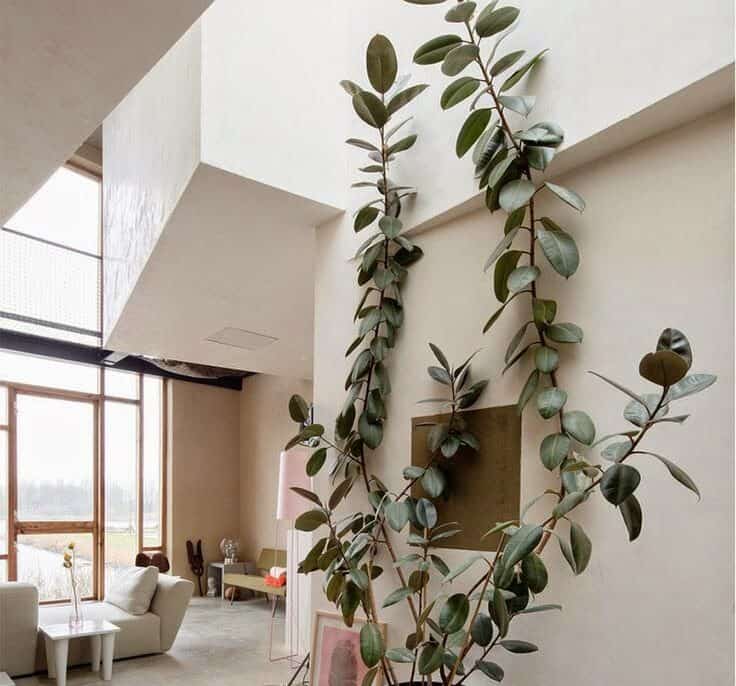
With its oversized glossy leaves, upright growth, and deep green to almost black-purple coloring, a rubber tree is easily one of the best large indoor plants for making a room feel more sculptural.
Mine also works especially well with the darker woods, black accents, vintage pieces, and mid-century shapes I tend to use throughout our home.
I’ve been growing rubber plants for more than ten years, and I’ve definitely learned a few things the hard way.
One of my biggest mistakes was moving a healthy rubber tree from our living room into a colder, drafty hallway. It quickly started looking unhappy.
Lesson learned: rubber plants like consistency.
Once you get the light, watering, and placement right, though, they are surprisingly manageable houseplants.
Here is exactly how I care for mine.
Ficus Rubber Tree Plant Care at a Glance
| Care Requirement | What a Rubber Tree Likes |
|---|---|
| Botanical name | Ficus elastica |
| Common names | Rubber plant, rubber tree, rubber fig, India rubber plant |
| Light | Bright, indirect or filtered light |
| Water | Water when the top 2 to 3 inches of soil feel dry |
| Soil | Loose, well-draining indoor potting mix |
| Temperature | Approximately 65°F to 85°F |
| Humidity | Average to moderately humid household conditions |
| Fertilizer | Feed during active spring and summer growth |
| Pruning | Best for controlling height and encouraging branching |
| Indoor height | Often 6 to 10 feet with good care |
| Biggest problem | Overwatering and poor drainage |
In its natural habitat, Ficus elastica is actually a large tropical evergreen tree and can eventually reach 50 to 100 feet tall. Indoors, however, it is usually maintained at a much more manageable size and commonly grows between about 2 and 10 feet tall.
That makes it particularly useful when you want the visual impact of an indoor tree without bringing a truly enormous plant into your house.
How Much Light Does a Rubber Tree Plant Need?

If there is one thing I would get right first, it’s light.
I’ve made both mistakes with rubber plants. I’ve placed them somewhere too dark, and I’ve put them somewhere receiving harsher light than they were accustomed to.
The sweet spot is generally bright, filtered or indirect light.
A bright east-facing window is fantastic. South and west-facing rooms can also work beautifully, but I would move the plant back from extremely hot glass or use a sheer curtain to soften intense afternoon sun.
Rubber plants can tolerate some direct sunlight, especially gentler morning sun, but suddenly moving a plant that has been living indoors into strong direct sun can scorch its leaves. RHS similarly recommends bright filtered or indirect light for indoor Ficus elastica.
Can a Rubber Plant Survive in Low Light?

It can tolerate lower light better than some dramatic indoor trees, but there’s a big difference between surviving and thriving.
In lower light you may notice slower growth, smaller leaves, or long stretches between leaves as the plant reaches toward available light.
If your rubber tree isn’t growing much, light is one of the first things I would investigate.
For other options in challenging rooms, I have a full guide to large indoor plants that tolerate lower light.
One Easy Trick for Healthier Rubber Plant Leaves
Clean them. Seriously. Those big beautiful leaves are basically dust magnets. I occasionally wipe mine with a slightly damp microfiber cloth or duster gloves.
You don’t need leaf-shine products.
Just support the underside of each mature leaf with one hand and gently wipe the surface with the other. Be especially careful around new leaves because they are much more delicate.
Tips for Limiting Lighting

Best Temperature and Humidity for Rubber Trees
Rubber trees are tropical plants, so warmth and consistency are your friends.
Normal household temperatures generally work very well. I try to keep mine somewhere around 65°F to 85°F, although the bigger lesson is avoiding sudden temperature swings.
Keep your plant away from:
cold winter windows, frequently opened exterior doors, heating vents, fireplaces, and strong air-conditioning drafts.
That hallway mistake I mentioned earlier?
Cold draft.
The plant went from looking fantastic to developing stressed foliage surprisingly quickly.
Rubber trees also appreciate moderate humidity, but you don’t need to transform your living room into a greenhouse.
If your home’s air becomes particularly dry during winter, a plant humidifier is much more effective than obsessively misting the leaves.
How Often Should You Water a Ficus Rubber Tree Plant?

Here’s where I disagree with almost every rigid plant watering calendar you’ll find online:
Don’t water your rubber tree because seven days have passed. Water it because the soil needs water.
Your plant might need water every week during a bright, warm summer. It might take considerably longer during winter. Instead, stick your finger about 2 to 3 inches into the soil. If the soil still feels noticeably moist, wait.
If those upper inches feel dry, it’s probably time to water. Then water thoroughly until excess water drains from the bottom of the pot.
The combination I want is simple:
A thorough watering followed by a period of partial drying.
What you don’t want is permanently soggy soil.
Waterlogged roots can eventually lead to root rot, which is one of the fastest ways to turn a beautiful rubber plant into a very unhappy rubber plant.
How to Know When It’s Time to Water Your Plant

My Rubber Tree Watering Rule
I would much rather check the soil twice than blindly follow a watering schedule.
Your home’s temperature, pot size, soil, humidity, season, and amount of light all affect how quickly that soil dries.
That little two-second soil check has saved me a lot of plants over the years.
Best Soil for a Rubber Tree Plant
Rubber plants are not terribly complicated when it comes to soil. The most important thing is drainage. I use a loose, good-quality indoor potting mix and make sure the pot has an actual drainage hole. You can improve a heavier potting mix by adding something like perlite or another coarse material that increases aeration.
The goal is soil that can hold enough moisture for the roots without staying waterlogged. And yes, I’m going to say it again: Use a pot with a drainage hole.
A beautiful decorative planter isn’t worth sacrificing the plant.
You can always keep your rubber tree in a nursery pot and slip that inside a decorative planter instead.
How to Fertilize a Rubber Tree

Your rubber tree can survive without constant feeding, but fertilizer can support stronger growth when the plant is actively producing new leaves.
I concentrate fertilizing during spring and summer when my plants are actually growing. A balanced indoor plant fertilizer is perfectly adequate.
Rather than getting overly attached to one NPK number, I recommend following the directions on the fertilizer you’re using and avoiding the temptation to think more fertilizer equals more growth.
It doesn’t.
During fall and winter, when growth slows because days are shorter, I reduce or stop feeding depending on what the plant is doing.
RHS recommends feeding Ficus elastica during active growth and watering more sparingly through winter.
How to Make a Rubber Tree Grow Taller
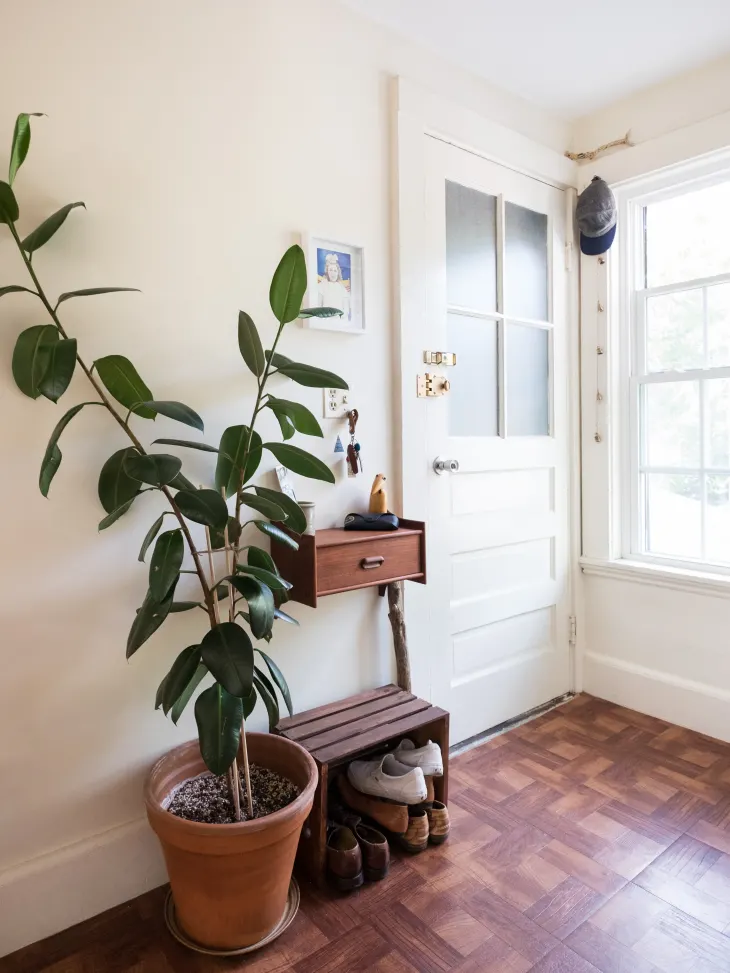
Want that dramatic indoor-tree look? Give it excellent light and don’t over-prune the main growing stem. Rubber plants naturally want to grow upward. If yours becomes tall and slightly unstable, you can also use a bamboo stake or plant support to keep the trunk upright while it strengthens.
Just remember that dramatically increasing pot size isn’t a shortcut to a larger plant. An oversized pot can hold unnecessary moisture around the root system.
How to Make a Rubber Plant Bushier
This is where pruning becomes useful. If you leave a rubber plant completely alone, it often develops a strong vertical form.
If you want a fuller or more branched shape, pruning the growing tip can encourage new growth farther down the stem.
I usually do my more substantial shaping during spring when the plant is entering active growth.
Use clean pruning shears and make your cut just above a node. And don’t throw away that cutting. You can turn it into another plant.
Important: Watch the White Sap
When you prune a rubber tree you’ll notice a sticky, milky latex sap.
I recommend wearing gloves and avoiding contact with your skin and eyes because the sap can be irritating. Ficus species are also considered plants to keep away from pets that may chew them.
Pruning & Shaping Your Plant

How to Propagate a Rubber Tree Plant
Propagation is one of my favorite plant-parent tricks because you’re essentially getting a second plant out of something you were already planning to prune.
Spring and early summer are ideal because the plant is actively growing.
Here’s the method I would use:
- Choose a healthy stem approximately 4 to 6 inches long with at least one healthy node.
- Cut below the node using clean pruning shears.
- Wear gloves and blot away excess milky sap with a paper towel.
- Remove the lowest leaves while leaving one or two healthy leaves toward the top.
- Dip the cut end into rooting hormone if you’re using it.
- Place the cutting into a small container filled with moist, well-draining propagation mix.
- Keep the cutting somewhere warm with bright, indirect light.
- Keep the growing medium lightly moist while roots develop.

A node matters because this is where new growth originates. Rubber plants can also be propagated through air layering, which is particularly useful if you’re dealing with a large plant or substantial stem.
When Should You Repot a Rubber Tree?
You do not need to repot simply because another year has passed.
Instead, look at the plant.
I repot when I notice signs like roots circling heavily inside the container, roots coming through drainage holes, the soil drying dramatically faster than it used to, or the plant becoming unstable in its current pot.
When you do move up, increase the pot diameter gradually.
Usually a container just 1 to 2 inches wider is plenty.
Make sure the new pot drains properly, refresh the soil, water everything thoroughly, and then allow the plant to settle into its new home.
RHS notes that rubber plants can be top-dressed annually and repotted roughly every two to three years as needed.
I also love using repotting as an excuse to reconsider how plants are working visually in a room. My bedroom plant decor guide has more ideas for making houseplants feel intentional rather than randomly scattered around your home.
The Propagation Process
While you can always go to the store and buy another nursery pot plant, you can actually get more plants from the ficus rubber tree plant you already have through a process called propagation. Essentially, you’ll be taking the stem cuttings and—rather than throwing them away—growing new plants from them.
Select cuttings that are at least six inches long with four leaf nodes or more on each cutting. Take these cuttings and use a paper towel to pat the ends until the cuttings stop dripping sap. From here, remove the bottom leaves from the cuttings, leaving only a single top leaf behind.

Next, fill a small pot for each cutting with potting soil, poking a small hole into the center of the soil with your finger. Apply rooting hormone to the end of each cutting, then place the cutting in the hole, making sure that the top node sits right at the top of the soil. Pat the soil around the cutting. Then, roll up the remaining leaf and hold it in place using a rubber band. Stick a little stake through the rolled leaf to secure the plant in place.
To wrap things up, take a plastic zip bag, poke a few holes in it, then place it over the top. Secure it in place using a rubber band, then put the pot in an area with plenty of indirect sunlight. Spray the plant with water occasionally to prevent the soil from drying out. After a month or so, the plant should have established roots.
Repotting Your Plant
Pin this article
Pin It NowFor the ficus rubber tree plant, being slightly potbound doesn’t pose much of an issue, but it’s still something that you’ll want to address before the roots start growing out from the bottom of the pot. These plants grow pretty quick, so I’ve actually had quite a few that needed to be repotted yearly. I’ve found that the yearly bedroom plant decor refresh was the perfect time for this!
Early spring and early summer are generally the best times for a repot since it’s the beginning of the growing season. When picking a new pot, make sure that the new one has enough space for the size your plant will be, not the size that it currently is. Generally, an inch or two more in diameter should be enough for a year or so of growth.
As always, make sure your new pot has drainage holes to prevent water buildup and eventual root rot! After repotting, give the plant a good watering to help settle the soil, but let the top few inches of the soil dry out before resuming your normal watering schedule.
Dealing With Pests & Other Common Issues

Thankfully, I haven’t had a lot of trouble with my most recent ficus rubber tree plant, but I’ve had the occasional issue in the past. Overall, though, there aren’t too many things that can go wrong with these plants, which is great for the less-confident plant parent.
I would recommend checking out my post on fungus gnat treatment for house plants. These plants can also get infested with spider mites, mealybugs, and scale insects. Treatment is simple; just refer to this chart.
| Pest | Signs | Solution |
| Fungus Gnats | Small flying bugs around your plant, larvae visible in the soil | Soil replacement, traps, mosquito dunks, Pyrethrin spray |
| Mealybugs | Cottony, white clusters on the plant | Insecticidal soap, neem oil |
| Scale Insects | Tan and brown bumps on your plant’s stems | Manual removal, insecticidal soap |
| Spider Mites | Yellowing leaves and webbing on your plant | Maintain humidity levels, insecticidal soap, neem oil |
For non-pest-related issues, you can refer to this chart instead!
| Problem | Signs | Solution |
| Overwatering | Yellow leaves, soft stems, root rot | Let the soil dry, reduce watering frequency, improve drainage |
| Underwatering | Curling leaves, drooping leaves | Increase watering, check soil more frequently |
| Insufficient lighting | Pale leaves, leggy stems, slow growth | Move your plant, consider supplemental light sources |
Common Rubber Tree Problems and How to Fix Them
One of the best things about rubber trees is that their leaves tend to give you clues when something isn’t right.
Here’s where I would start.
| Problem | What You May Notice | What I Would Check First |
| Overwatering | Yellowing leaves, soft growth, constantly wet soil | Let soil dry further and confirm drainage |
| Underwatering | Drooping or curling leaves, very dry soil | Water thoroughly and monitor soil more often |
| Too little light | Slow growth, smaller leaves, stretched stems | Move closer to a brighter window |
| Too much sudden sun | Pale or scorched brown patches | Move away from harsh afternoon sun |
| Cold drafts | Leaf stress, yellowing, sudden leaf drop | Move away from doors and cold windows |
| Root bound | Soil dries very quickly, crowded roots | Repot one size larger |
| Spider mites | Fine webbing, speckled foliage | Isolate and treat promptly |
| Mealybugs | White cottony clusters | Remove pests and use appropriate treatment |
| Scale | Brown or tan bumps on stems and leaves | Remove manually and treat |
| Fungus gnats | Small flies around moist soil | Let soil dry more and treat the growing medium |
Spider mites, scale, and mealybugs are among the pests associated with ficus plants, and root rot can become a problem when drainage or watering is poor.
If tiny flying bugs seem to be coming from the soil rather than the foliage, read my complete guide to getting rid of fungus gnats in houseplants.
More Great Plants for Your Interior


Why Are My Rubber Plant Leaves Turning Yellow?
My first suspicion is usually moisture.
Check the soil before doing anything else.
If it is consistently wet, the plant may be getting watered too frequently or the container may not be draining properly.
If the soil is extremely dry, watering could also be the problem.
Next, check the light and temperature.
A rubber plant sitting in a dark corner, beside a cold door, or directly against a hot sunny window may all show stress differently.
Rather than immediately adding fertilizer, I troubleshoot environment first.
Why Is My Rubber Tree Dropping Leaves?
Sudden leaf drop often tells me something changed.
Maybe the plant was moved.
Maybe temperatures dropped.
Maybe the watering pattern changed.
Maybe winter arrived and the amount of available light dramatically decreased.
Ficus plants in general tend to appreciate consistent growing conditions, so whenever one suddenly looks unhappy, I retrace what changed during the previous few weeks.
That strategy has solved more plant problems for me than almost anything else.
Why Are My Rubber Plant Leaves Curling?
Start with the soil.
Curling or drooping leaves combined with dry soil can indicate that the plant needs water.
If the soil is wet, however, don’t automatically add more.
Check the roots, drainage, temperature, and light before making another change.
This is also why I don’t diagnose houseplants from one symptom alone.
The leaf and the soil together usually tell you much more.
Popular Ficus Rubber Tree Varieties
Not every rubber tree looks the same, which is part of the fun.
Ficus elastica ‘Burgundy’ is one of my favorites because the leaves can become incredibly deep green to burgundy, almost reading as black in the right room.
That’s particularly good if you love the same high-contrast interiors I do.
Ficus elastica ‘Tineke’ has creamy variegation mixed with green and can develop beautiful pink tones on new growth.
Ficus elastica ‘Ruby’ leans even further into pink and reddish variegation.
Ficus elastica ‘Robusta’ gives you that classic broad, glossy green rubber plant look.
Variegated rubber plants generally benefit from brighter light to maintain their coloration, although harsh prolonged sunlight can still scorch the paler portions of their leaves.
FAQs About the Ficus Rubber Tree Plant

It can be grown as either an indoor plant or an outdoor plant. Really, it just depends on how big a plant you want. If you’re after an actual “tree”, then outdoor growth is best. However, if you’re looking for a plant under 10 feet tall, you might be better off growing your ficus rubber tree plant indoors.
These plants prefer bright, indirect sunlight with moderate humidity. Generally, I’ve found that east-facing windows work best, although south-facing and west-facing windows can work as well, so long as you can limit the light exposure.
Misting isn’t recommended, as it can quickly lead to brown spots and fungal issues. If humidity is an issue, then I’d recommend using a dedicated humidifier instead.
My Final Rubber Tree Plant Advice
After growing rubber plants for years, I think people sometimes make them harder than they need to be.
You don’t need a complicated routine. Give your ficus rubber tree plant plenty of light. Let the upper soil dry before watering again. Use a pot that actually drains.
Keep it away from sudden cold drafts. And then leave it alone long enough to grow.
That’s really the secret.
In return, you get one of the most sculptural houseplants you can bring into a room, with glossy oversized leaves and enough height to make an empty corner feel completely intentional.
For me, that’s what makes the rubber tree such a good design plant too. It doesn’t just add greenery. It adds shape, contrast, scale, and a little life to a room.
And that’s always worth making space for.
If you’re looking for your next plant project, explore all of my plant and garden guides, or check out my guide to Ficus Audrey if you’re debating which large ficus is right for your home. Happy growing!